When planning a lift, one of the first questions contractors ask is simple: how much does crane rental actually cost? The answer is not always straightforward. Crane pricing depends on the size of the crane, the length of the rental, site conditions, operator requirements, travel distance, and the complexity of the lift itself.
In Massachusetts, crane rentals can range from a few hundred dollars for a short-duration lift to several thousand dollars per day for large projects requiring specialized equipment. Understanding what drives those costs helps you budget accurately, avoid unexpected charges, and select the right crane for the job.
Whether you’re setting rooftop HVAC units in Boston, installing steel in Worcester, lifting trusses on a residential build, or handling industrial equipment in Springfield, this guide explains how crane rental pricing typically works and what factors influence the final cost.
Why Is Crane Rental Pricing Different for Every Project?
Unlike equipment that simply gets delivered to a site, a crane is often part of a carefully planned lifting operation. The equipment itself is only one piece of the equation. Site access, load weight, lift radius, setup requirements, permitting, and operator expertise all influence the final cost.
For example, two projects may require lifting the same 5,000-pound load. One lift might occur in an open commercial lot with easy crane access and take less than an hour. The other could involve navigating a congested downtown street, power lines, limited setup space, and a longer boom configuration. Even though the load weighs the same, the second lift will typically require more planning, more setup time, and potentially a larger crane.
This is why experienced crane companies begin with project details rather than immediately quoting a flat price. The safest and most cost-effective crane is the one properly matched to the lift requirements.
What Factors Affect Crane Rental Costs in Massachusetts?
Several variables determine crane rental pricing. Understanding them helps explain why one project may cost significantly more than another, even when the lifts appear similar at first glance.
Crane Size and Capacity
Crane capacity directly affects more than lifting power. As crane size increases, transportation requirements, setup time, counterweight needs, fuel consumption, and mobilization costs all increase as well. A contractor lifting rooftop HVAC equipment may only require a 30-ton boom truck, while a structural steel project may require a 70-ton crane because of building height and lift radius.
In many cases, the crane is selected not because of the load’s weight but because of where the load must be placed. A 4,000-pound air handling unit located 100 feet from the crane may require significantly more capacity than a 10,000-pound generator positioned directly beside it.
| Crane Capacity | Typical Applications |
|---|---|
| 15–30 Ton | HVAC units, residential trusses, light commercial work |
| 40–70 Ton | Structural steel, commercial construction, industrial equipment |
| 80–150 Ton | Heavy steel erection, precast concrete, large mechanical systems |
| 200+ Ton | Complex industrial lifts, infrastructure projects, major construction |
As crane capacity increases, rental costs generally rise due to transportation requirements, setup complexity, and specialized operating considerations.
Lift Complexity
The actual lift matters just as much as the crane size. A simple pick-and-place operation costs less than a lift requiring multiple configurations, extended boom lengths, or difficult access conditions.
Factors that increase complexity include:
- Long lift radiuses
- Tight urban job sites
- Restricted setup areas
- Overhead utility lines
- Multiple picks during the same operation
- Engineered lift plans
- Critical lifts involving sensitive equipment
Project Location
Massachusetts projects vary significantly by location. A lift in a rural area with easy access differs substantially from a project in downtown Boston where traffic management, permits, and staging limitations may affect operations.
Travel distance, mobilization requirements, and local site conditions can all influence final pricing.
Are Crane Rentals Priced by the Hour, Day, or Project?
One of the biggest misconceptions about crane rental is that pricing works like renting a skid steer or excavator. In reality, you’re often paying for far more than the crane itself. Operator time, mobilization, setup, permits, rigging requirements, and site conditions all influence how a crane rental is structured.
Depending on the scope of work, Massachusetts crane rentals are typically quoted using one of three pricing models.
Hourly Crane Rental
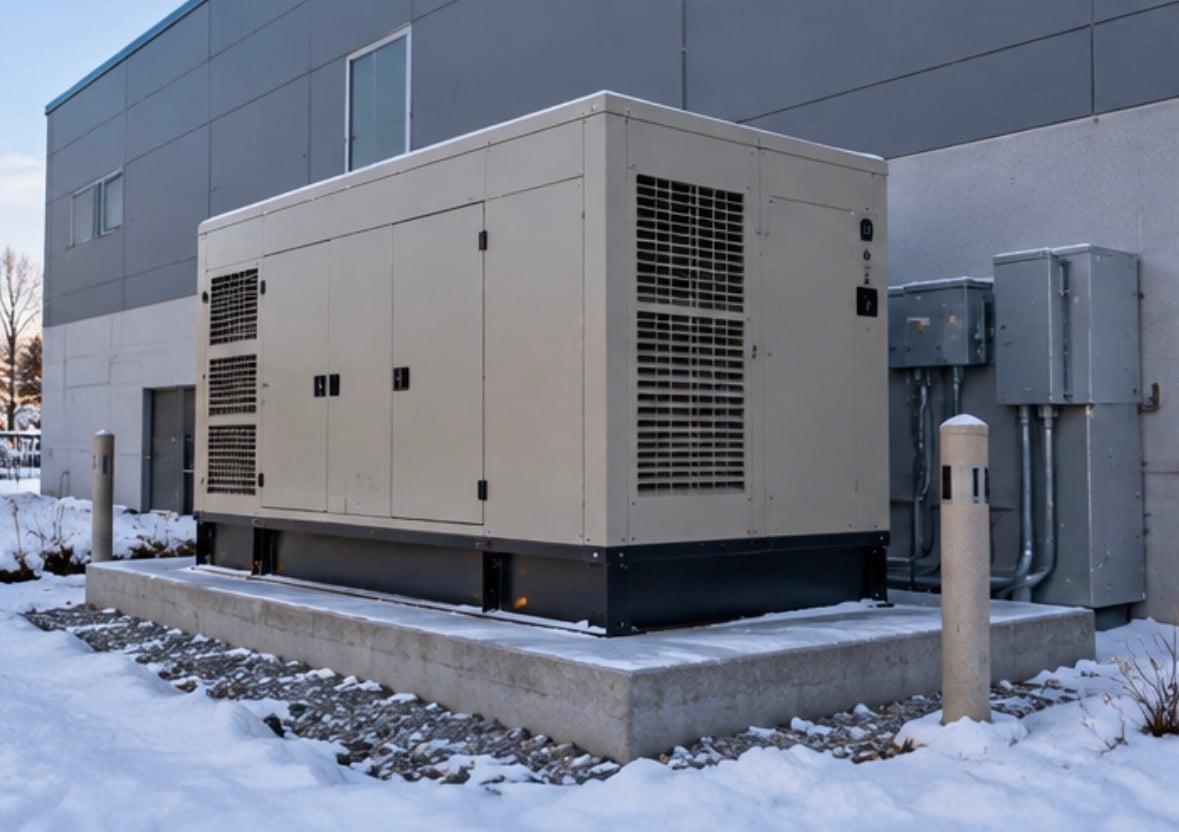
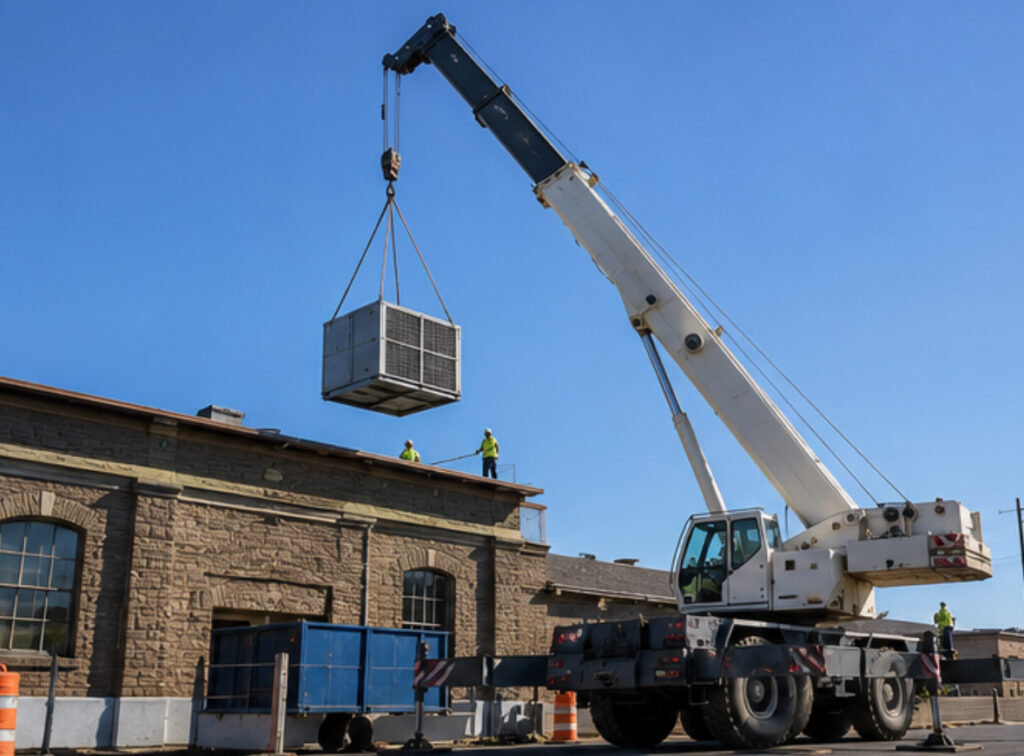
Hourly pricing is most common for short-duration lifts where the crane can arrive, complete the work, and demobilize the same day. Typical examples include rooftop HVAC replacements, setting generators, lifting hot tubs, placing steel beams, or handling commercial equipment installations.
Many crane companies charge a minimum rental period, often 2 to 4 hours, because transportation and setup frequently take longer than the actual lift itself.
| Typical Hourly Lift Projects | Common Rental Range* |
|---|---|
| HVAC Unit Placement | $600–$1,500+ |
| Generator Placement | $700–$2,000+ |
| Residential Truss Installation | $800–$2,500+ |
| Mechanical Equipment Lifts | $1,000–$3,000+ |
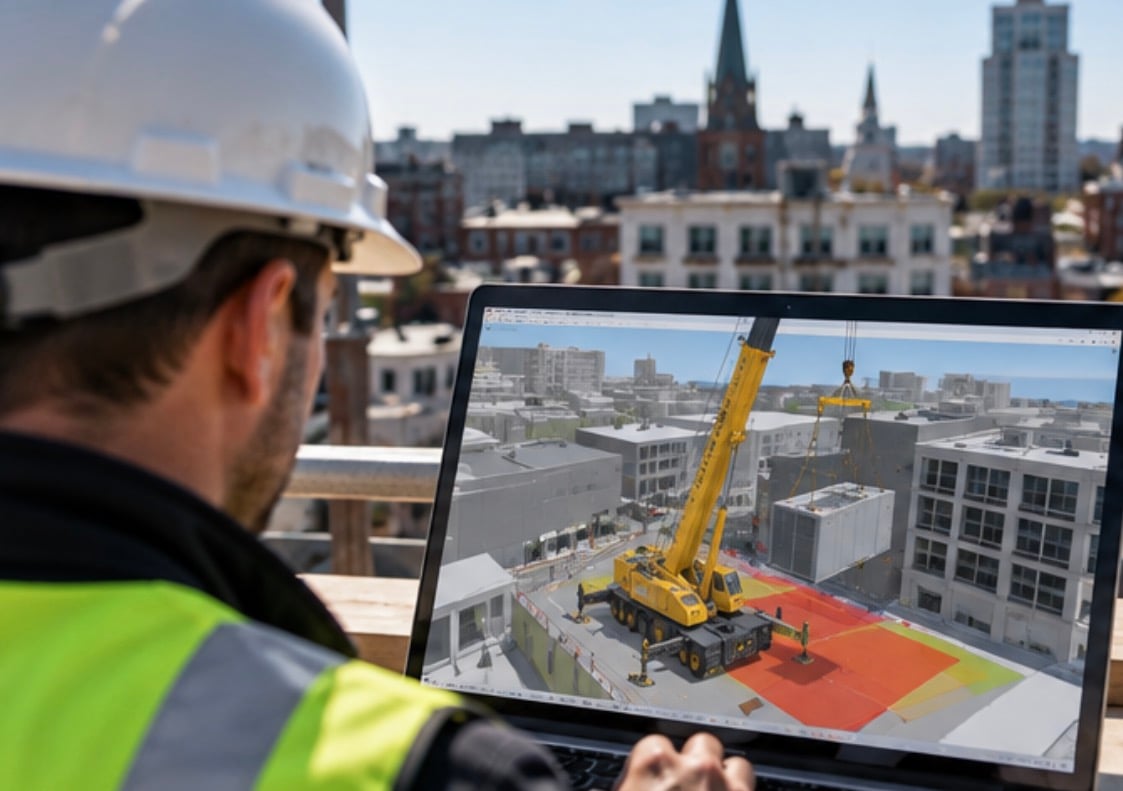
These ranges should be viewed as budgeting guidelines rather than exact rates. Two projects using the same crane can have dramatically different costs depending on setup requirements, travel distance, lift duration, and site conditions. For example, a 30-ton crane used to place rooftop equipment at a suburban shopping center may cost substantially less than the same crane working in downtown Boston where street occupancy permits, traffic control, and limited staging areas increase project complexity.
Daily Crane Rental
Daily crane rentals become more economical when multiple lifts are planned throughout the day or when the project schedule is less predictable. Commercial construction sites, steel erection projects, precast installations, and industrial shutdowns often use daily pricing because crews need flexibility without watching the clock every hour.
In many cases, contractors discover that a daily rental costs less than extending an hourly rental across a full workday.
Project-Based Crane Pricing
Complex lifts are often priced as complete projects rather than by time. This is common for bridge work, industrial equipment relocation, cell tower installations, large steel packages, and engineered critical lifts.
These projects frequently involve:
- Site visits and lift planning
- Engineered lift calculations
- Specialized rigging
- Permit coordination
- Traffic control requirements
- Multiple mobilizations
- Several days of crane support
Rather than billing every hour separately, project pricing allows contractors to understand the full lifting cost upfront and avoid unexpected budget increases as the project progresses.
The best pricing structure depends on the lift itself. For a straightforward rooftop unit replacement, hourly crane rental may make sense. For a multi-phase construction project, daily or project-based pricing often delivers better value and more predictable budgeting.
What Does Crane Rental Typically Cost by Tonnage?
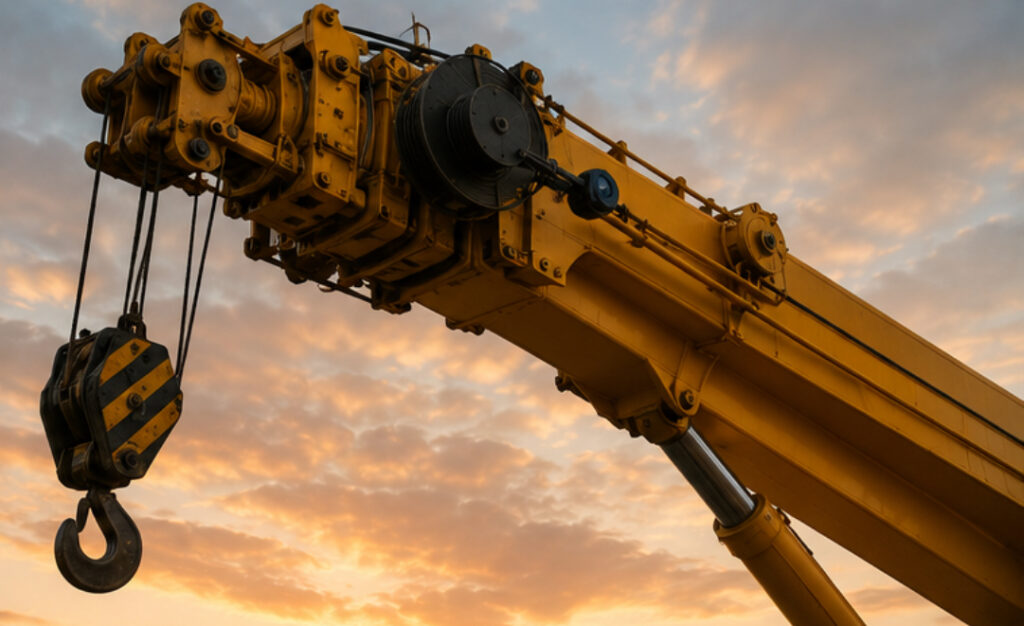
While every project is unique, crane capacity plays a major role in pricing because larger cranes require additional transportation, setup time, counterweights, and operational planning. Contractors often ask for a price per ton, but crane rental costs are really based on the equipment required to safely complete the lift.
The table below provides general pricing ranges commonly seen across Massachusetts projects:
| Crane Capacity | Typical Rental Range* |
|---|---|
| 15–30 Ton Crane | $200–$400+ per hour |
| 40–70 Ton Crane | $300–$600+ per hour |
| 80–150 Ton Crane | $500–$1,000+ per hour |
| 200+ Ton Crane | Custom project pricing |
- Actual costs vary based on project location, setup requirements, operator time, travel distance, and lift complexity.
For example, a simple rooftop HVAC replacement may only require a smaller crane for a few hours, while a structural steel project may require a larger crane on site for multiple days. This is why many contractors start by discussing the lift itself rather than focusing solely on crane size.
Are There Additional Costs Beyond the Crane Rental?
One of the most common budgeting mistakes is assuming the crane rental rate covers every aspect of the project. In reality, several project-specific factors can affect the final cost.
Potential additional expenses may include:
- Mobilization and transportation
- Permit requirements
- Traffic control or police details
- Street occupancy permits
- Specialized rigging equipment
- Engineered lift plans
- Extended setup time
- Additional counterweights
- Multi-day project staging
This does not mean every project includes these costs. Many straightforward lifts require nothing beyond standard crane rental service. However, identifying potential requirements early helps avoid surprises and allows the crane company to recommend the most efficient solution.
For projects involving steel erection, HVAC replacement, equipment relocation, or construction material placement, discussing site logistics in advance often leads to significant savings.
How Can You Get the Most Accurate Crane Rental Quote?
The fastest way to receive an accurate quote is to provide as much project information as possible upfront. Experienced crane companies can often identify challenges before the crane ever arrives on site.
Useful information includes:
Load Weight
Knowing the actual weight of the item being lifted is critical. Manufacturer specifications, equipment documentation, and engineering drawings can help verify the load.
Lift Height and Radius
The distance the crane must reach often matters more than the weight itself. A relatively light load lifted at a long radius may require a much larger crane than expected.
Site Access
Photographs, site plans, and project drawings help determine whether the crane can access the location safely and efficiently.
Project Timeline
Knowing whether the lift is scheduled for a single day, multiple days, or a larger construction phase helps determine the most cost-effective rental structure.
For many commercial and industrial projects, a professional site visit is the best way to identify equipment requirements and prevent delays. Contractors planning upcoming work often benefit from consulting a crane rental service early in the planning process rather than waiting until the final construction phase.
Why Choose MacDonald Crane for Crane Rental in Massachusetts?

Successful lifts begin long before the crane arrives on site. Proper equipment selection, lift planning, site evaluation, and operator experience all play a major role in keeping projects safe, efficient, and on schedule.
MacDonald Crane supports contractors, mechanical companies, steel erectors, manufacturers, and property owners throughout Massachusetts with crane solutions tailored to the specific requirements of each project. Whether the lift involves rooftop HVAC equipment, structural steel, precast concrete, machinery relocation, or specialty lifting, the team evaluates load requirements, lift radius, access conditions, and site logistics before recommending equipment.
From short-duration crane rentals to multi-phase construction projects, MacDonald Crane provides experienced operators, detailed lift planning, and dependable crane rental services designed to help clients complete lifts safely and efficiently. If you’re budgeting an upcoming project or comparing crane options, our team can help determine the right equipment and rental structure for your specific lift.