

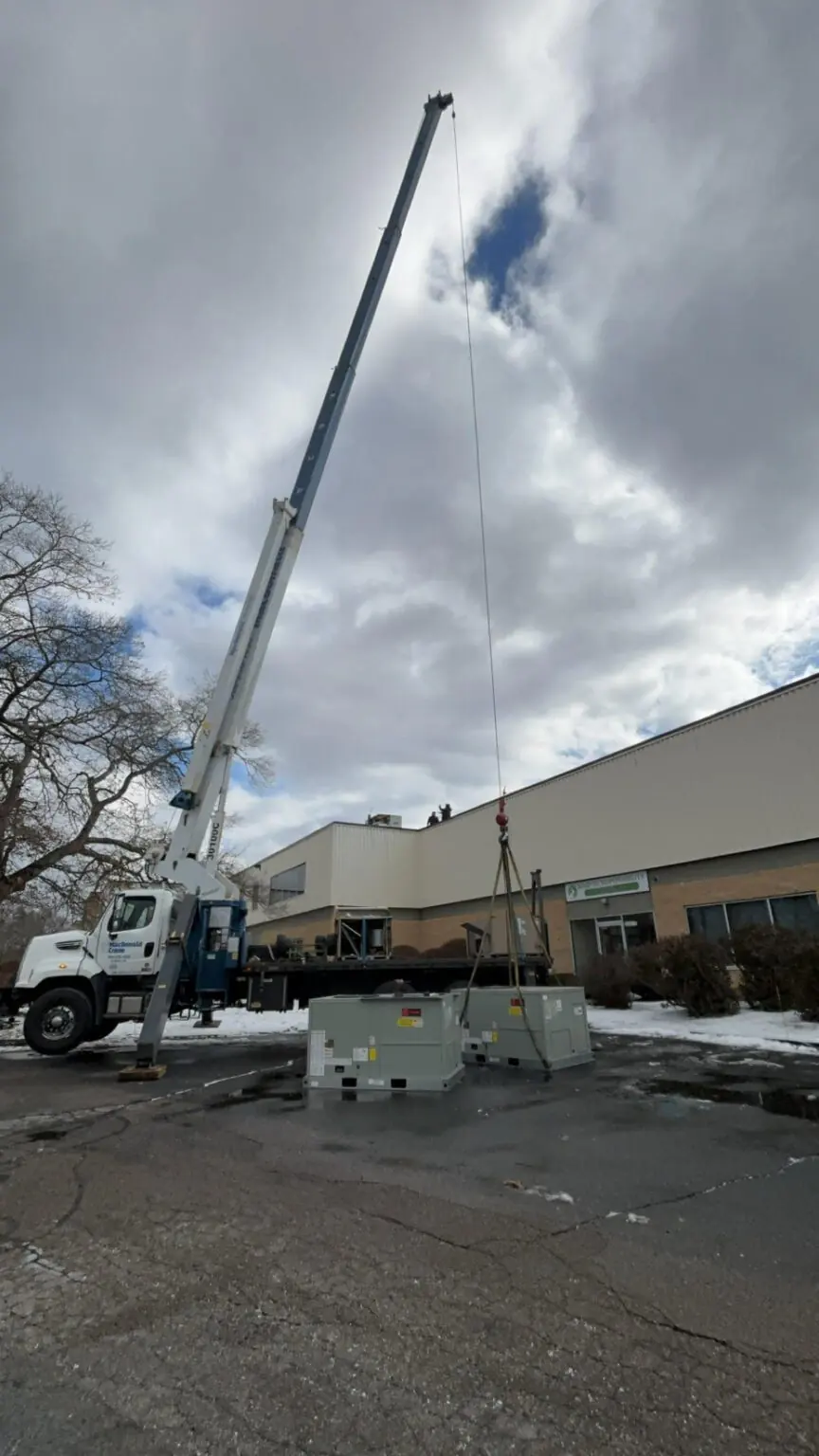
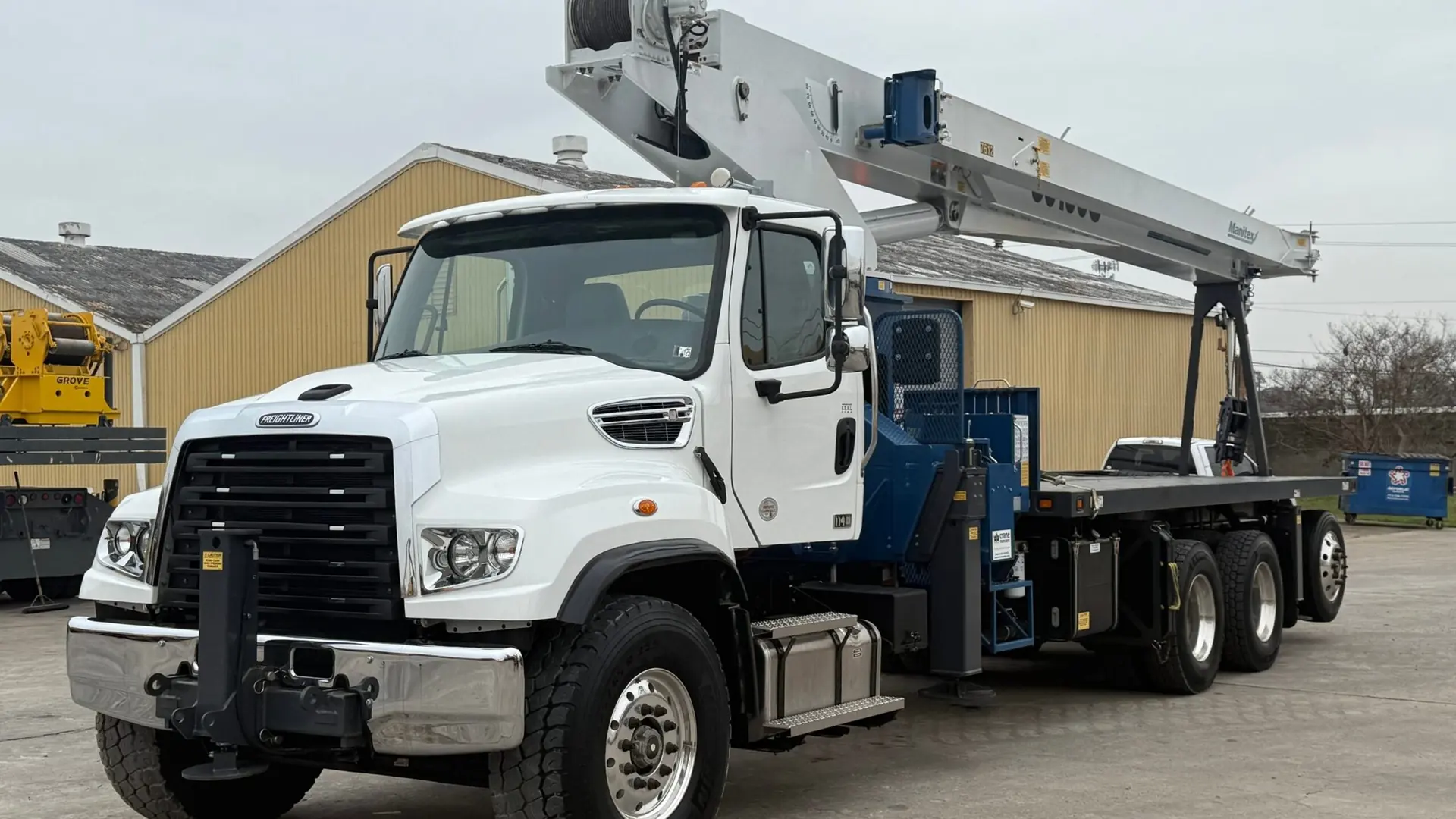
Manitex 30100C · 30-Ton Boom Truck Crane
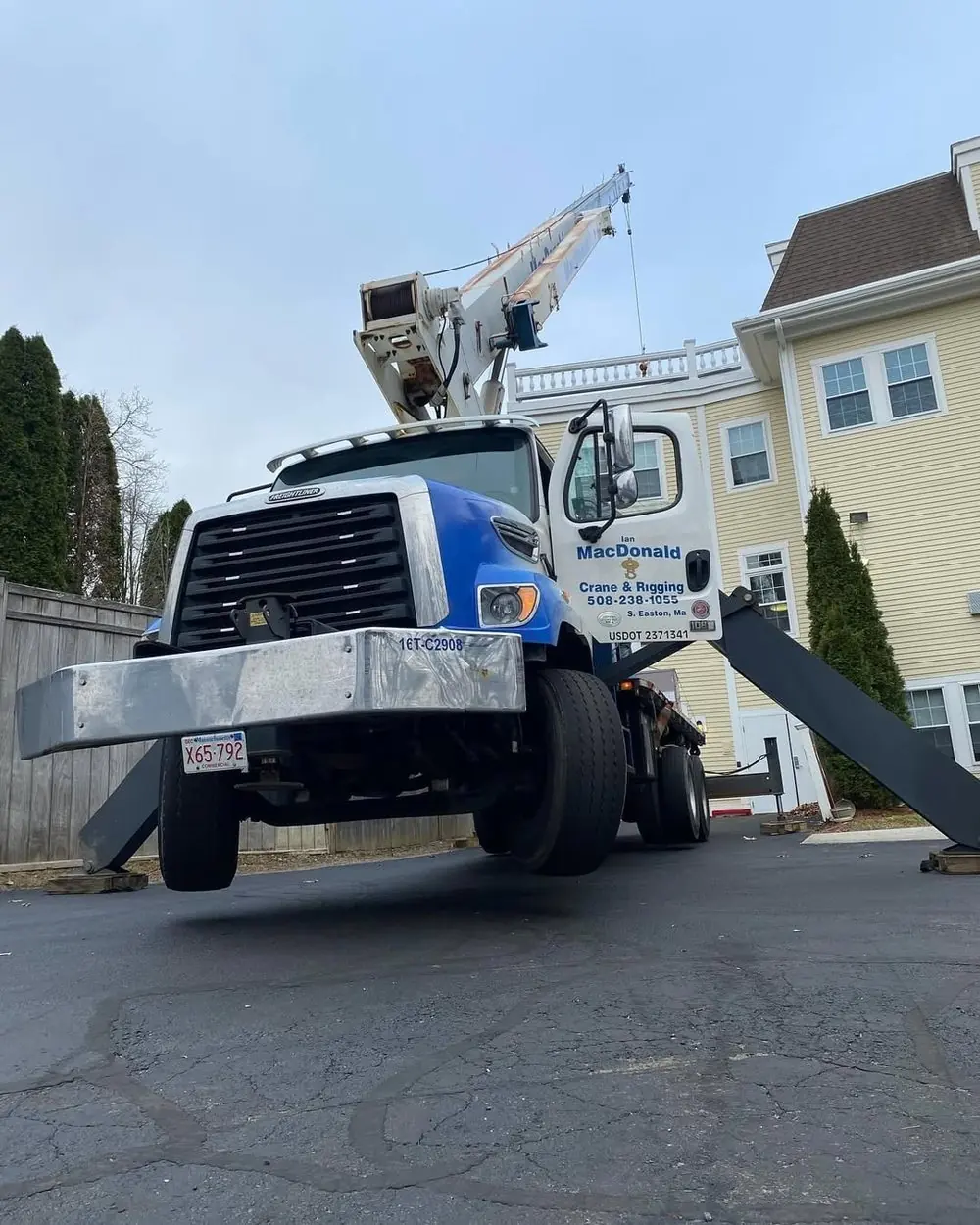
Most sets go out on this one. It carries a 100-foot main boom in four sections, and it fits into side yards and courtyards where the pad sits close to the building.
See the 30-ton boom truck crane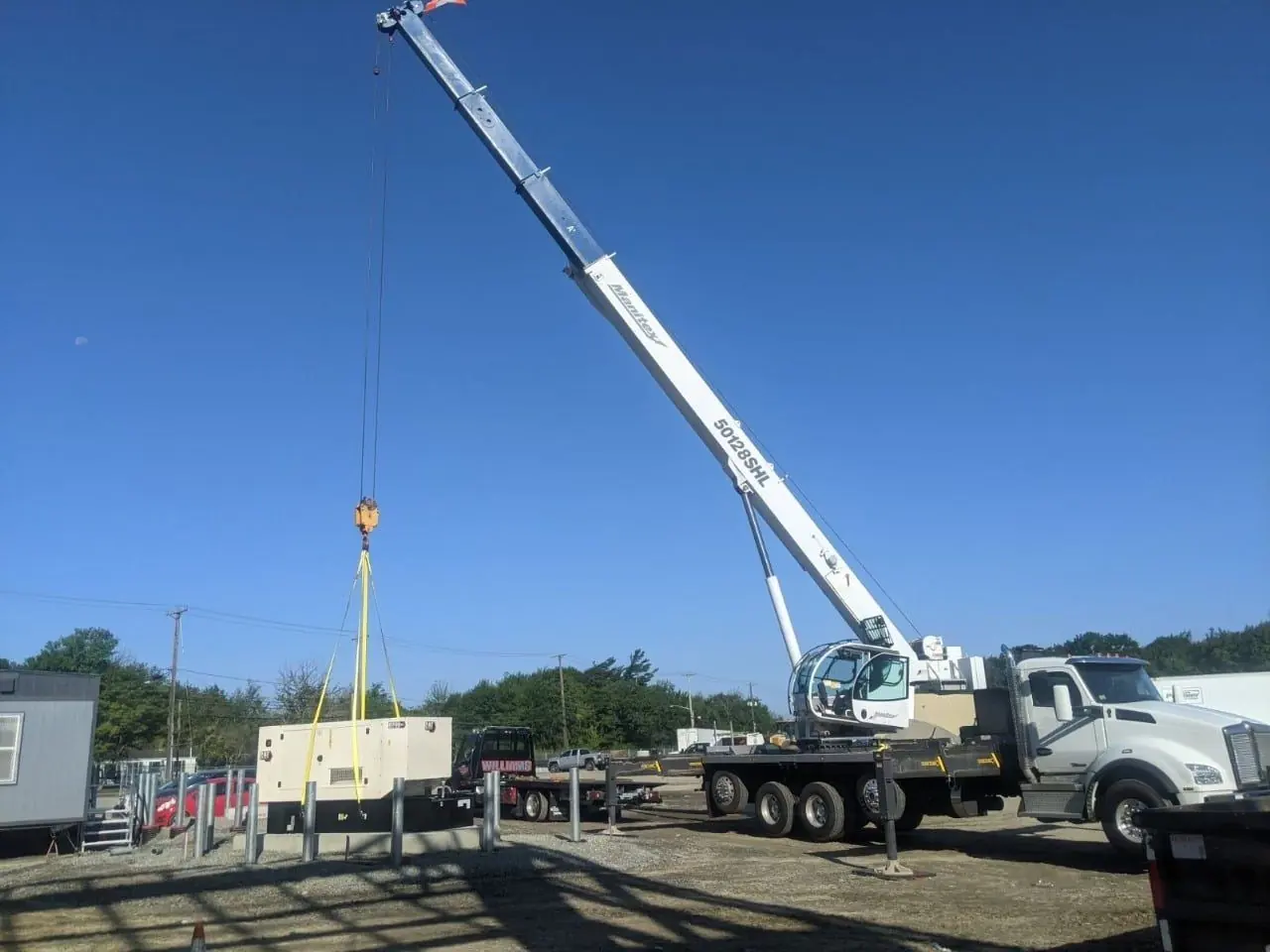
A generator pad goes where the electrical run is shortest, not where a crane can work. So by the time the set arrives on a flatbed, getting it onto that pad depends on whatever room the site has left for a crane. Your crew stands by and the job waits until the set is bolted down.
At MacDonald Crane we lift generator sets onto their pads for electrical contractors and facilities teams. A lot of it is behind buildings that are open and running. Some is new construction, and some is a replacement going into a spot nobody planned for a crane.
The first thing we want to know is how far the pad sits from the nearest place a crane can set up. That distance is one of the main factors that determines the crane setup and lift requirements.
That measurement rarely exists this early, and it does not need to. Send us a photograph of the pad and anywhere a crane could park, and we will work the lift out with you first.
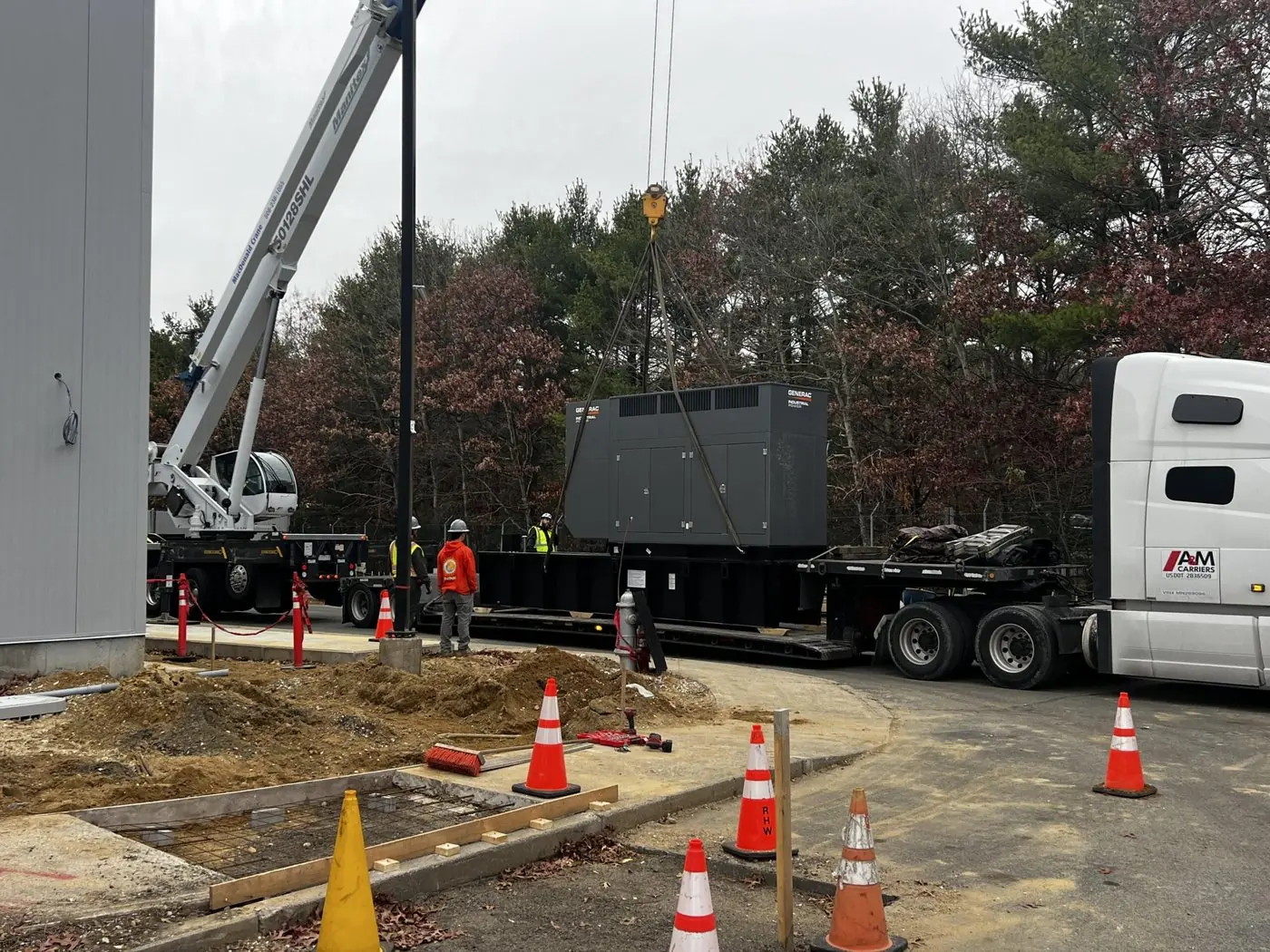
Kilowatts will not tell you what a generator weighs. A 100 kW rating describes the power the set puts out, not its weight. Two sets with the same rating can be thousands of pounds apart once the enclosure and tank are counted.
Call (508) 238-1055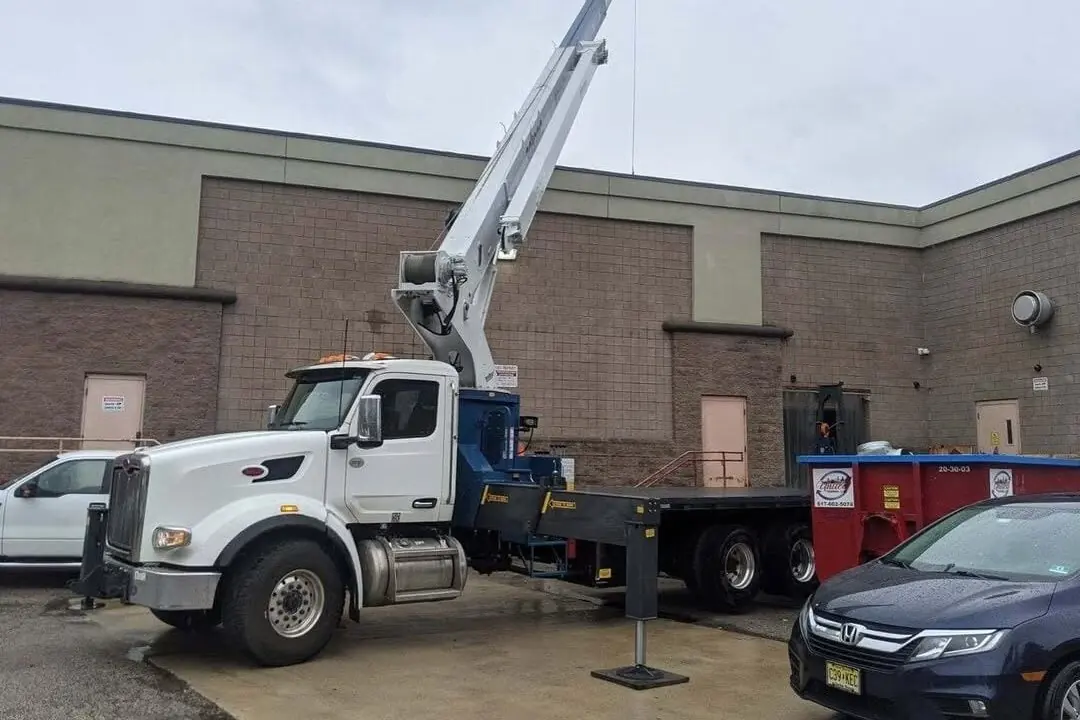
The machine choice depends on the weight, height, distance to the pad and available setup area.
Most sets go out on this one. It carries a 100-foot main boom in four sections, and it fits into side yards and courtyards where the pad sits close to the building.
See the 30-ton boom truck crane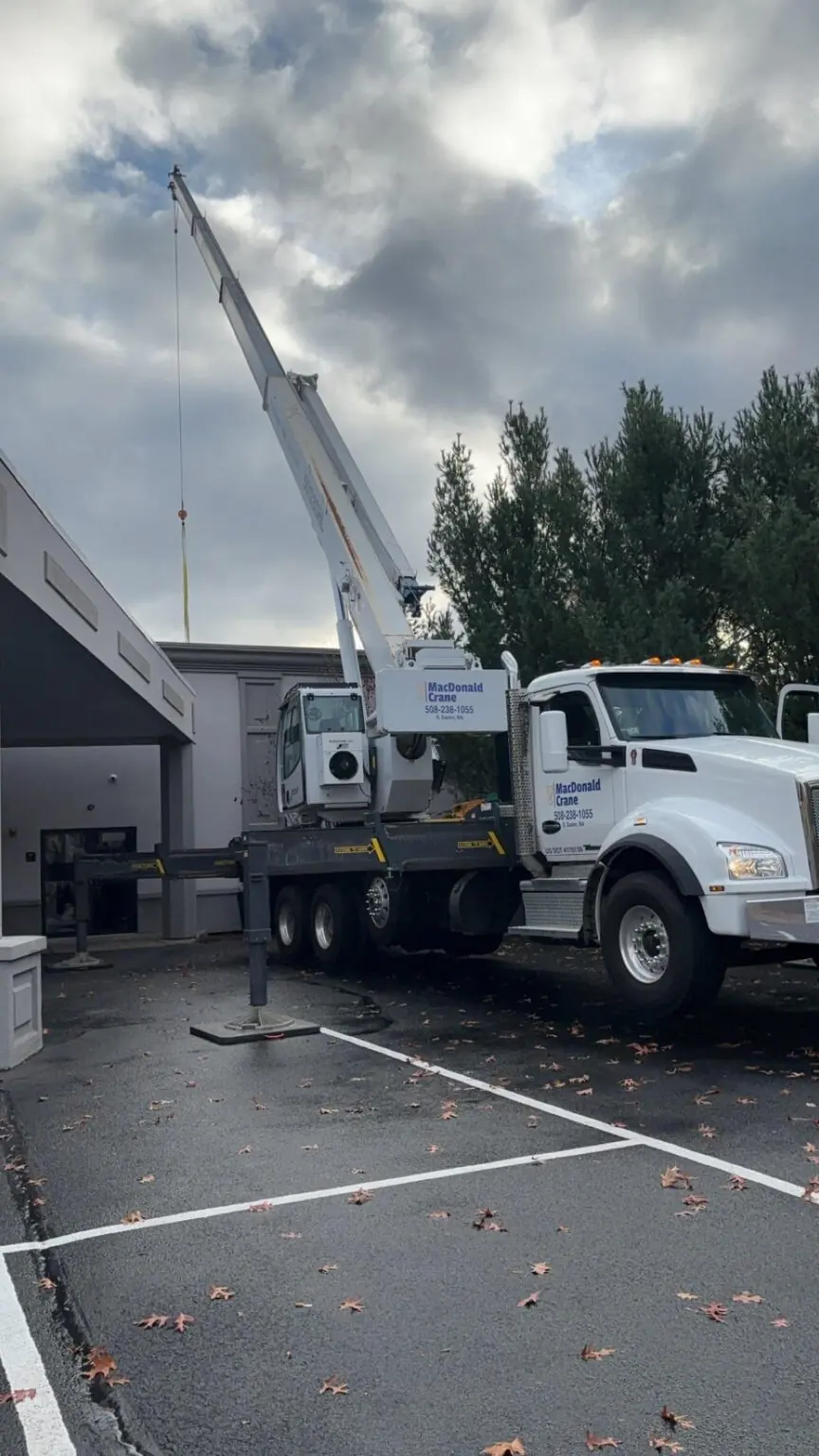
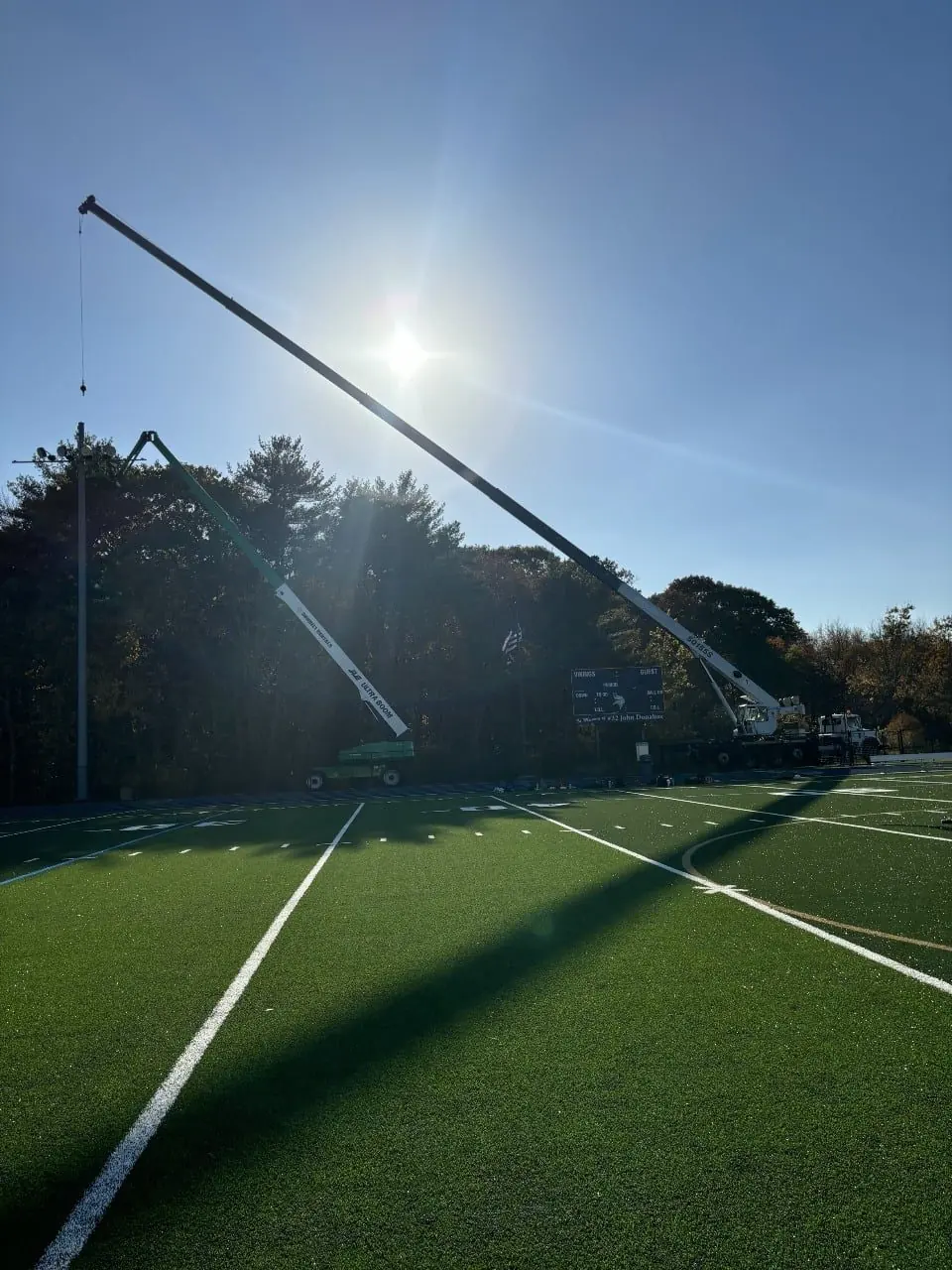
This one goes out when the job needs more capacity and reach. Its main boom runs to 128 feet in four sections. Sets going onto a roof are the usual reason for it.
See the 50-ton boom truck crane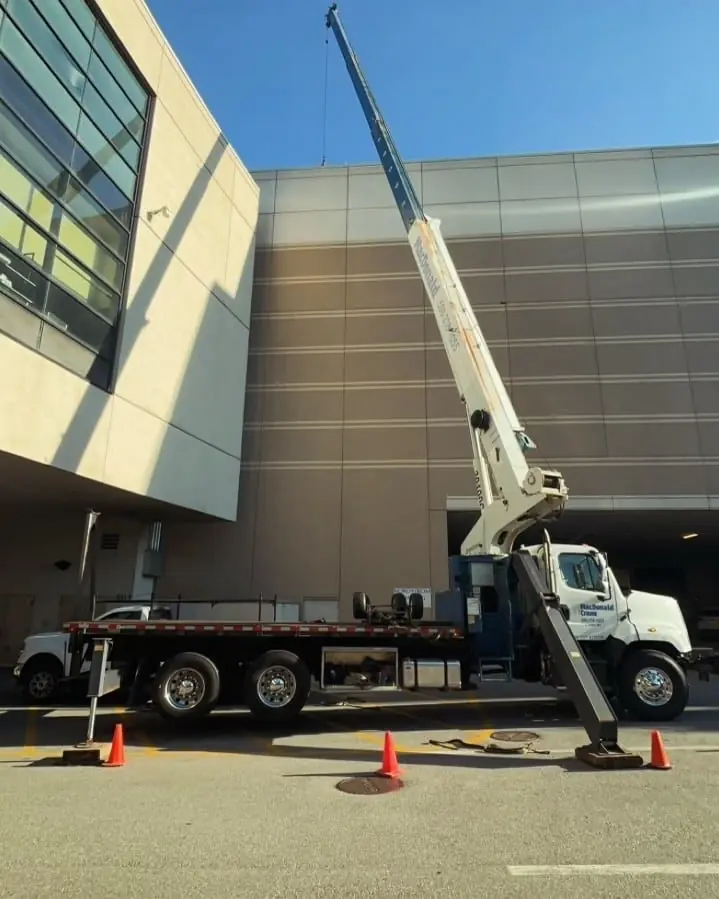
What the set weighs, enclosed and on its tank. Send the figure for the set as it will arrive, not the open skid. One 100 kW diesel set is listed at about 2,800 lbs open with no tank, and about 5,700 lbs enclosed on its sub-base fuel tank.
The height it has to clear. Most sets land on a pad at grade, so what we want is the height of whatever the load travels over. Usually that is a fence, a screen wall or the building itself, though a set going onto a roof changes the machine.
How far the pad is from where the crane can set up. Pace that distance from the nearest firm, level ground a crane could sit on to the middle of the pad. If a transformer, a loading dock or parked cars are in the way, say so.
Those three numbers help determine the right crane and what the lift will require.
Those three numbers tell us which machine the set takes and how the day should run. They also show whether anything about the pick wants looking at first.
No weight yet? Send a photograph of the nameplate and one of the pad, and we can work from those. Or call (508) 238-1055.
You give us the weight off the nameplate, the height it clears and the distance to the pad. We name the machine and how long the pick should run.
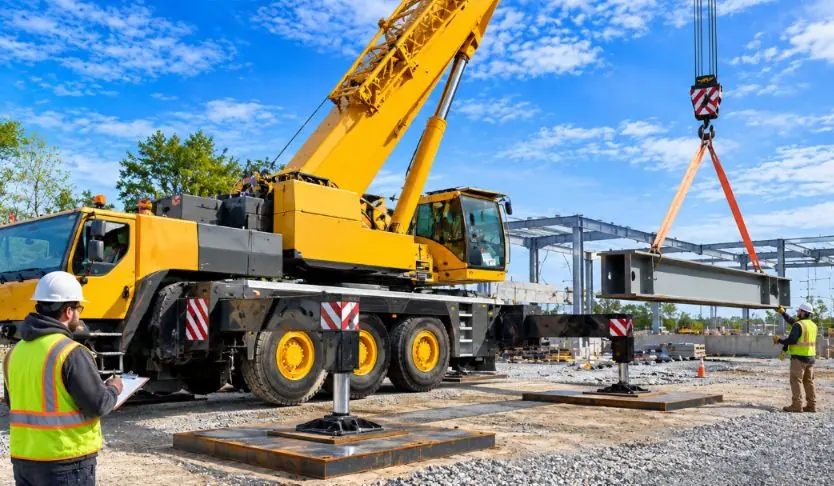
The operator walks the site with you, then sets the crane on firm ground with pads under the outriggers. On a tight site, settling that spot takes longer than the lift.
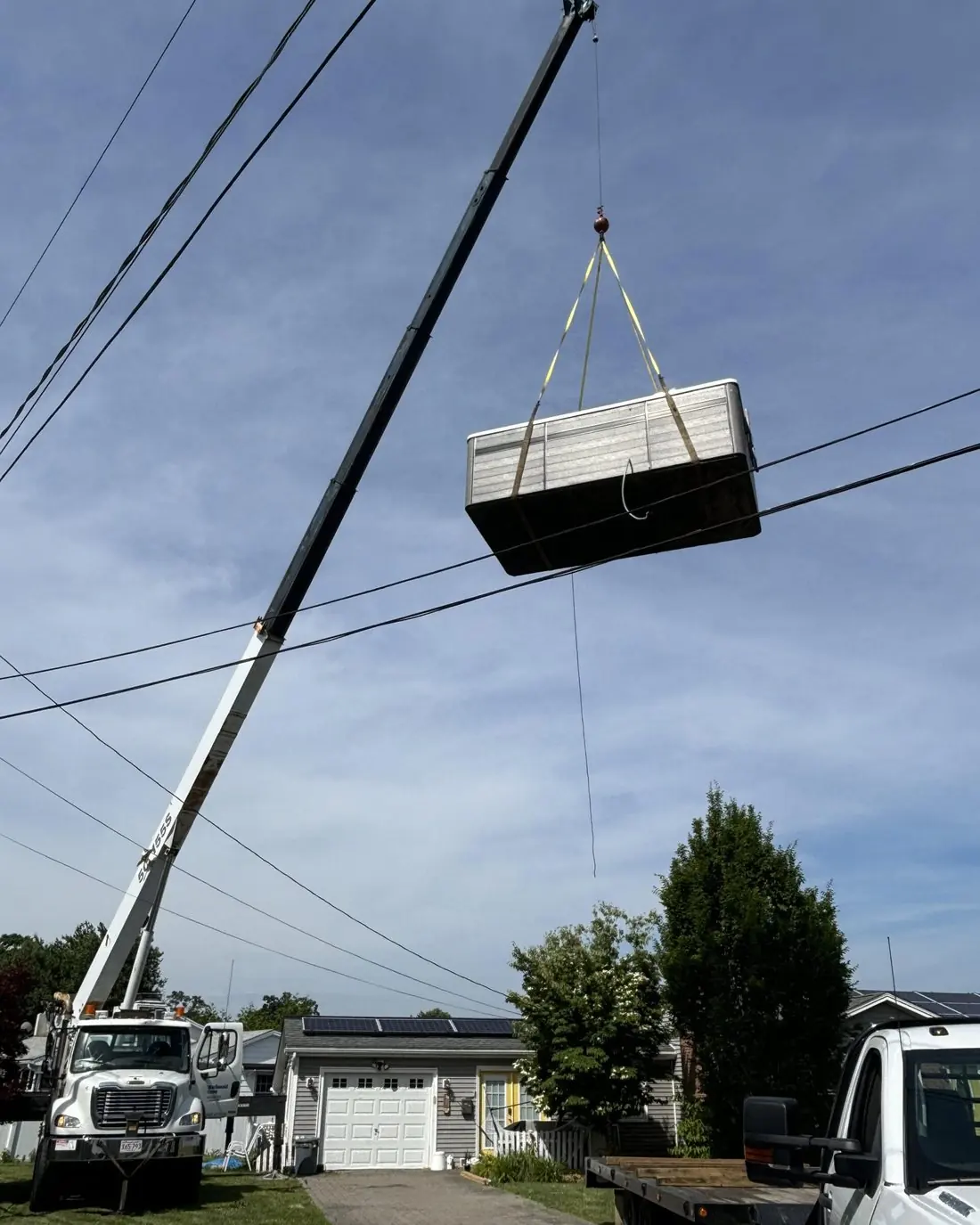
The set comes off the flatbed and travels the path the operator walked. Your crew takes it at the pad, and the anchor bolts get checked before it comes down.
It lands slowly onto the bolts, with your electrician calling the last few inches. Once it is shimmed or bolted down, the crane packs down and takes the rigging with it.
Those last two are not ours. We do not pull permits and we do not book police details, and that sits with whoever schedules the job. Apply as soon as the date looks likely.
Send the pad location while it is still a mark on a drawing and we will say whether a crane can reach it. Moving a pad on a drawing costs nothing. Moving one after the concrete is down is a different job.
The weight that matters is the set as it ships, enclosure and fuel tank included. That figure is on the nameplate rather than the quote. Send a photograph of that plate and the crane gets sized against the set that actually arrives.
A generator comes down onto anchor bolts already set in the concrete. There is no sliding it across afterwards. The operator brings it down in inches while your electrician lines it up, and that last part of the pick is where the time goes.
One of the sets we are proudest of went 15,000 lbs onto its pad. A standby unit for an office building, a school or a small plant is ordinary work. The weight is rarely the part that decides the day.
Four things fill the hours. The first two are getting the crane into position and the distance to the pad. The third is how long the set takes to land on its bolts, and the fourth is the drive, which runs port to port from Easton. A set on open ground is a short morning. The same set in a courtyard is not.
You control the approach and the pad. Clear whatever is parked nearby, have the bolts in and your electrician there, and the crane is not idle.
 What each crane costs per hour, and the minimum it books at
Based in Easton, MacDonald Crane serves contractors across Southeastern Massachusetts and surrounding areas.
Yes, and reach matters more on a roof than anywhere else. Send the roof height and where on the roof it has to land.
We can lift it out and set it on whatever is taking it away. Hauling it off site is a separate conversation. Tell us on the first call.
Advance notice helps us review the setup and schedule the right equipment. Call earlier if the pad is somewhere awkward, and we can work the setup out first.
Often, and a photograph answers it faster than a measurement. Send one from the street looking in, and one from the pad looking out.
That depends on how far the crane has to reach. Send the weight and the distance to the pad for a straight answer.
As the CFO of Climate Design Systems & Merrimack Valley Corporation, MacDonald Crane has been a very reliable partner to us and has always come through. Their prices are very competative to other local crane companies and they deliver! I highly recommend.
 Keith BentleyGoogle reviewRead on Google
10 years ago they delivered and placed four rooftop units to my job site. They were punctual, professional and the driver was a hot ticket. Will definitely use them again.
 Gary VitaglianoGoogle reviewRead on Google
Very reliable & safety is their #1 concern
 Cheryl O'DonnellGoogle reviewRead on Google
I have a hot tub business and use MacDonald exclusively for crane service. Best around!
 Roger MayerGoogle reviewRead on Google
The pad is where the electrical run put it, and the only question left is whether a crane can reach it. Send the weight, what it has to travel over, and how far the pad sits from the nearest ground a crane can stand on. You will have your answer and your machine.

 Get a Lift Quote