
4.8 Google reviewsoffice@macdonaldcrane.comMost weeks book up. Call two or three days ahead.

Solar Panel Crane Lifting for Installers Serving Southeastern Massachusetts, Boston, Cape Cod, Rhode Island & Southern New Hampshire

  • Panels, racking and equipment lifts
  • A certified operator on every machine
  • Out of the Easton yard since 2009

Request a Lift Quote

An Array Weighs More Than Its Panels

A solar job arrives at grade in separate deliveries and has to end up spread across a roof. Until it is up there your crew has nothing to build with, and the pallets sit in the lot taking up parking the building still needs.

At MacDonald Crane, we load commercial solar work for installers across eastern Massachusetts. Most of it is flat roofs, and it is very rarely one pick. Panels, racking, ballast and inverters all go up, and no two of them rig the same way.

What we want first is the layout, or a rough version of it. An array covers a whole roof rather than one work zone, so how far the loads have to travel from the crane counts for as much as what they weigh.

If the design is not finished, that is not a problem. Send us a photograph of the roof and the lot underneath, and we can work the loading through with you ahead of any date.

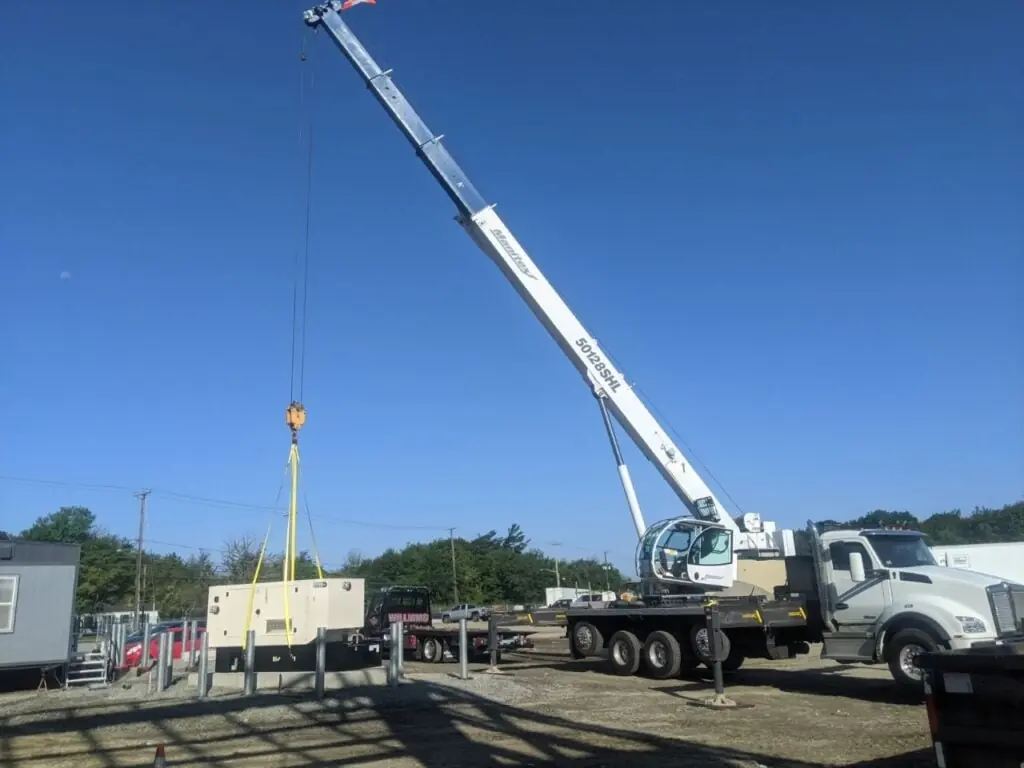
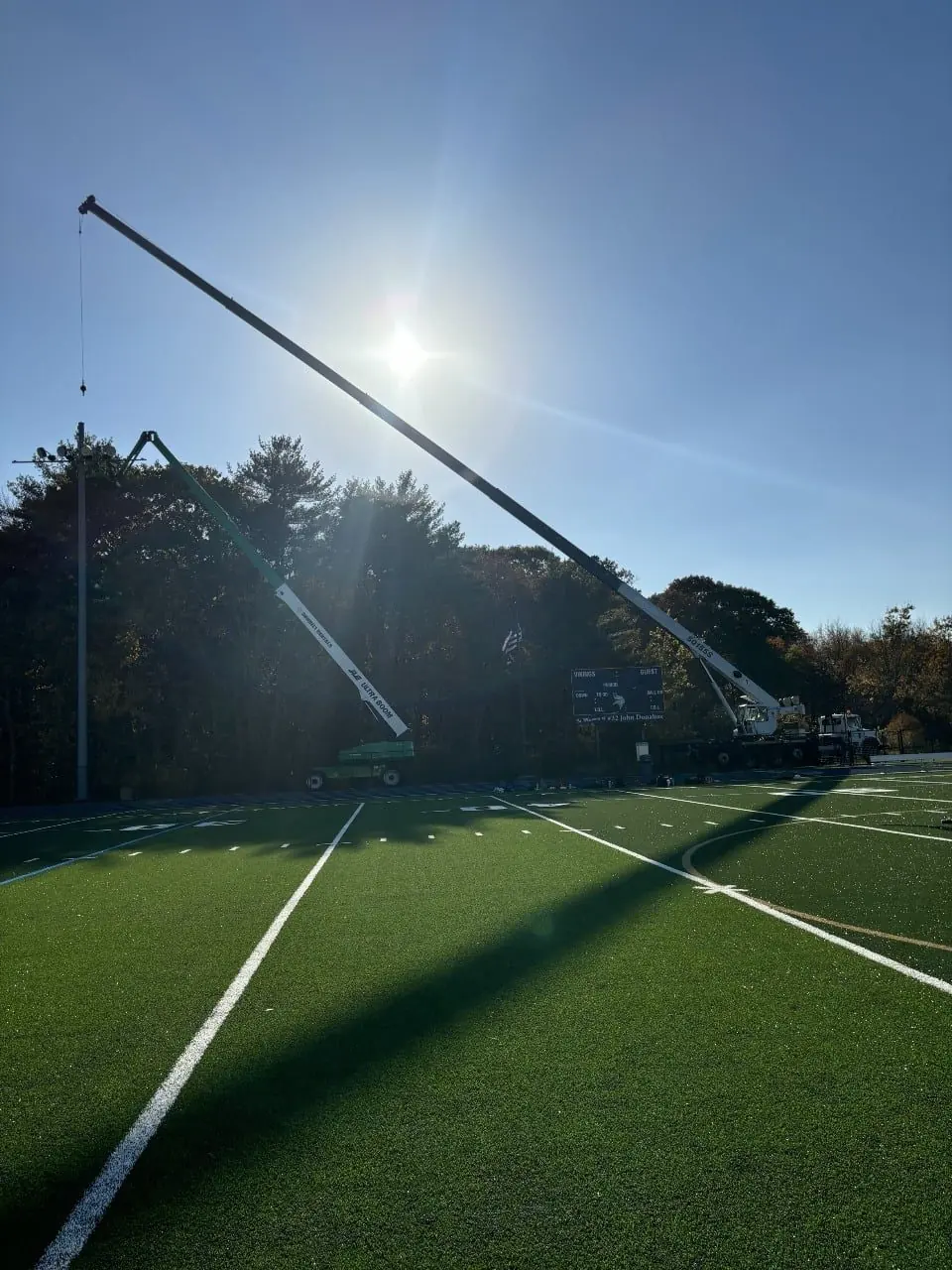
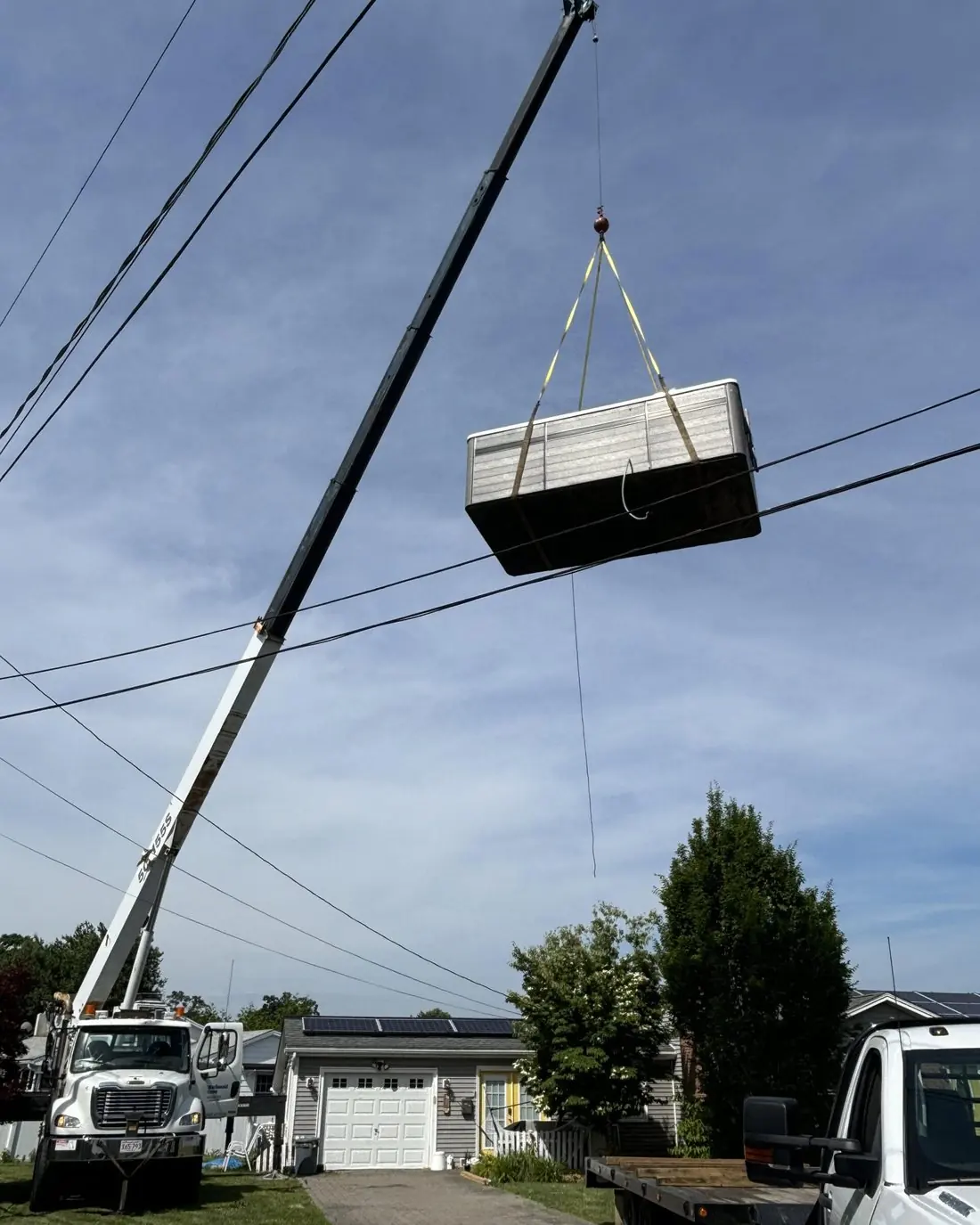
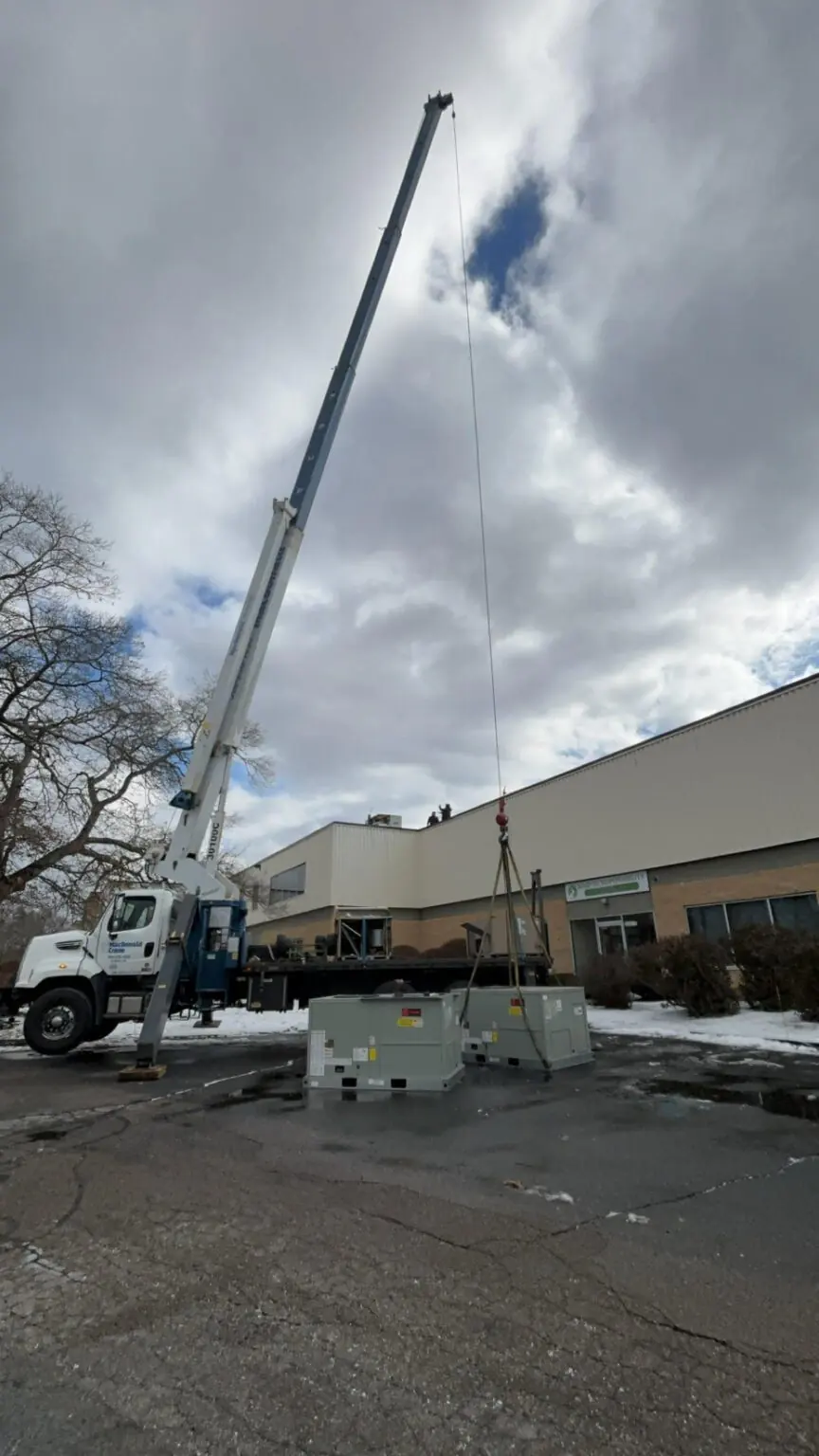
A crated load lifted high over the lot by a MacDonald Crane boom truck

What Actually Decides the Crane on a Solar Job?

The size of the system will not answer this. Nobody lifts a 200-kilowatt array. It goes up a skid at a time, and the machine gets picked on the heaviest skid, the roof height, how far the loads travel and what room there is to set up.

Call (508) 238-1055

The Cranes That Go Out on Solar Work

Which one goes out depends on the weight, the roof height, the reach and the room there is to set up.

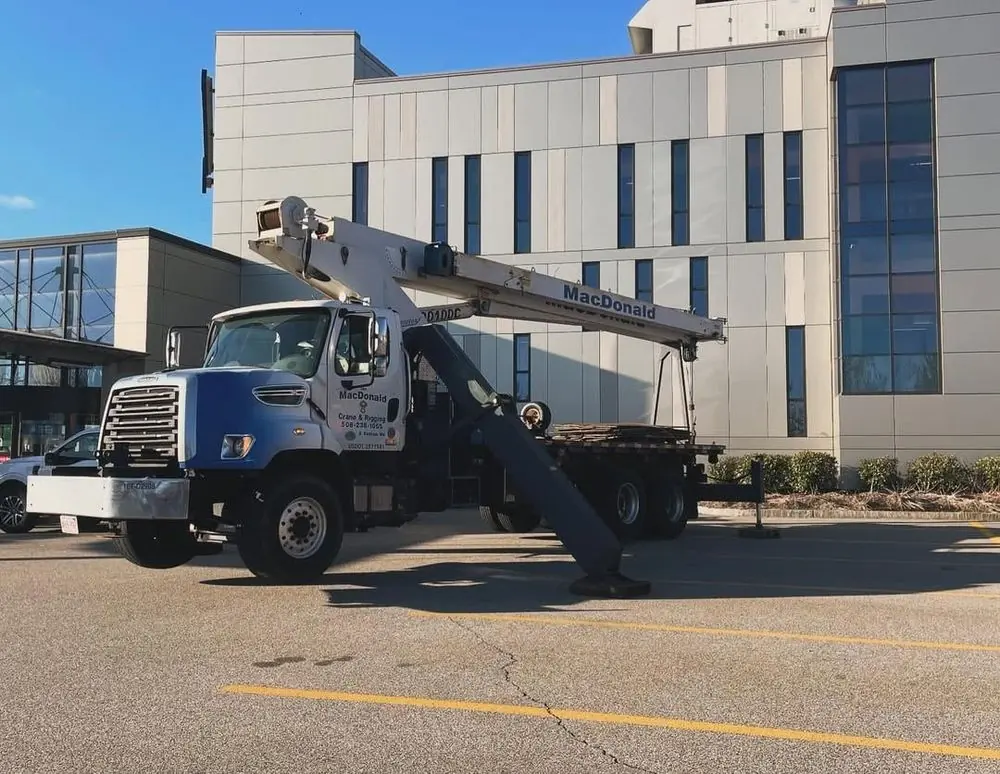
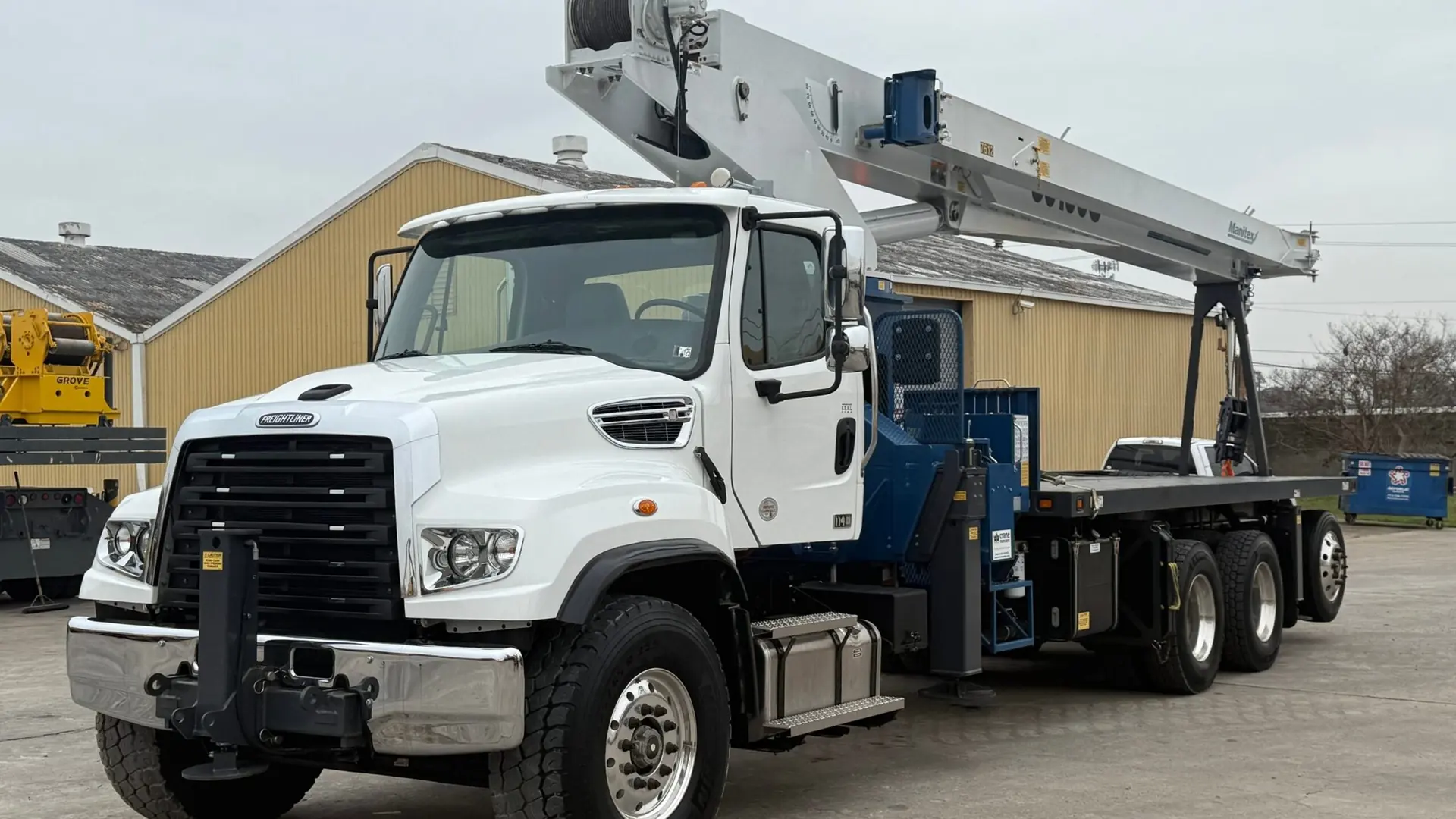
The Manitex 30100C 30-ton boom truck with its boom raised beside a low commercial building

Manitex 30100C · 30-Ton Boom Truck Crane

Main boom to 100 feet across four sections. It suits a low commercial roof where the crane can sit alongside the building, and it fits into a service drive without the lot being cleared for it. See the 30-ton boom truck crane
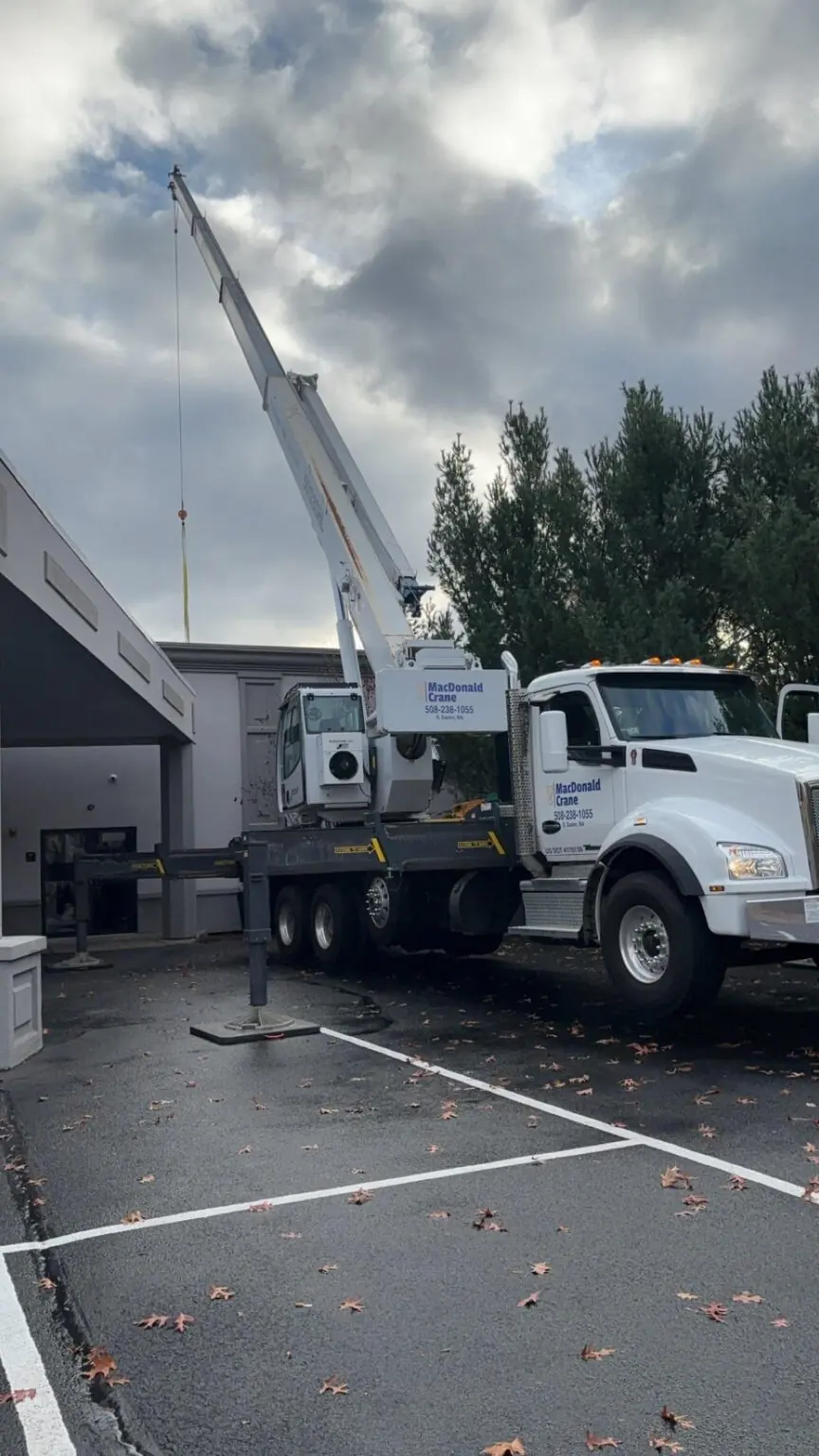
The Manitex 50128S 50-ton boom truck with its boom raised

Manitex 50128S · 50-Ton Boom Truck Crane

Main boom to 128 feet, same four sections. It is used when the lift requires additional reach or capacity based on the site setup. See the 50-ton boom truck crane

What We Ask About the Array

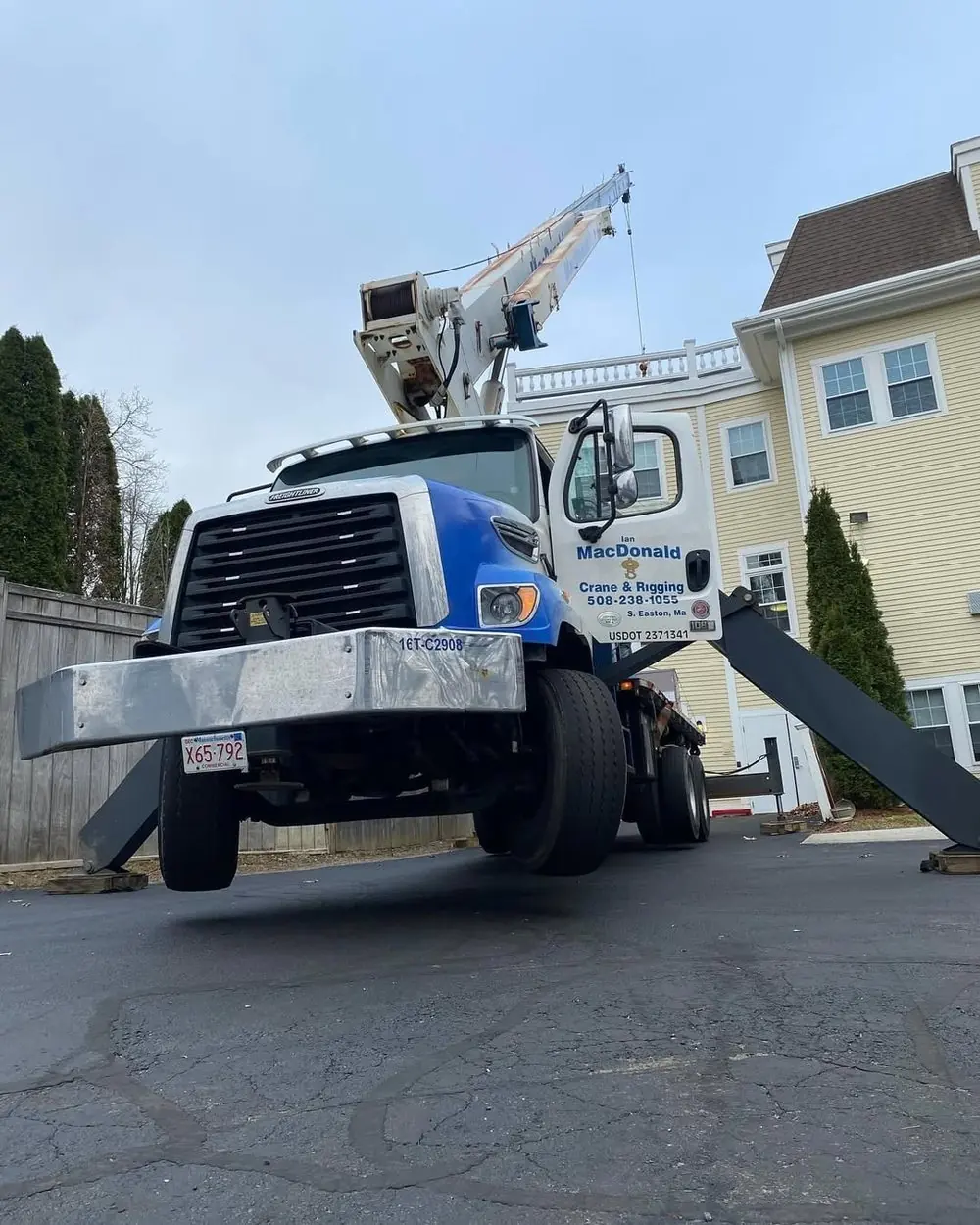
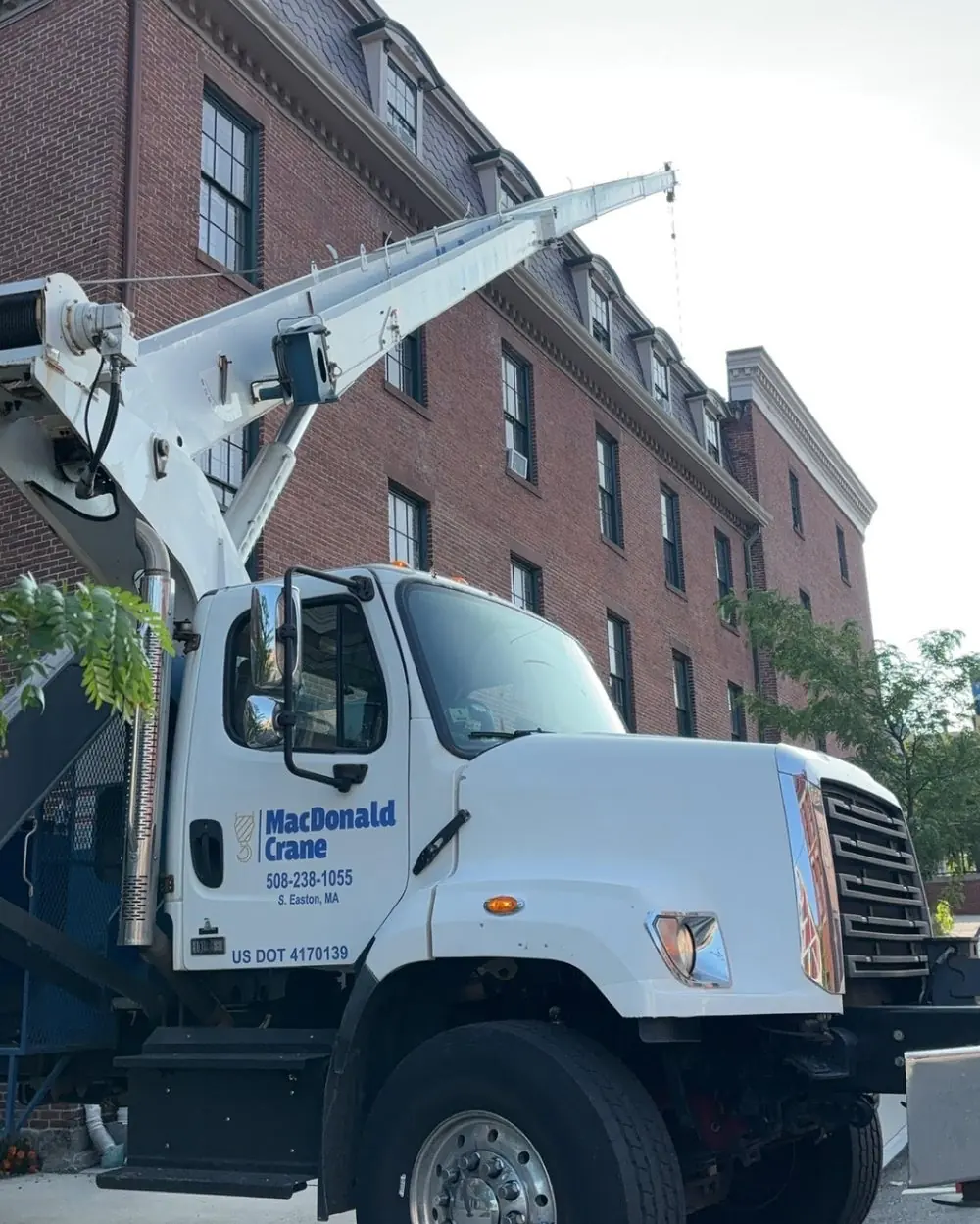
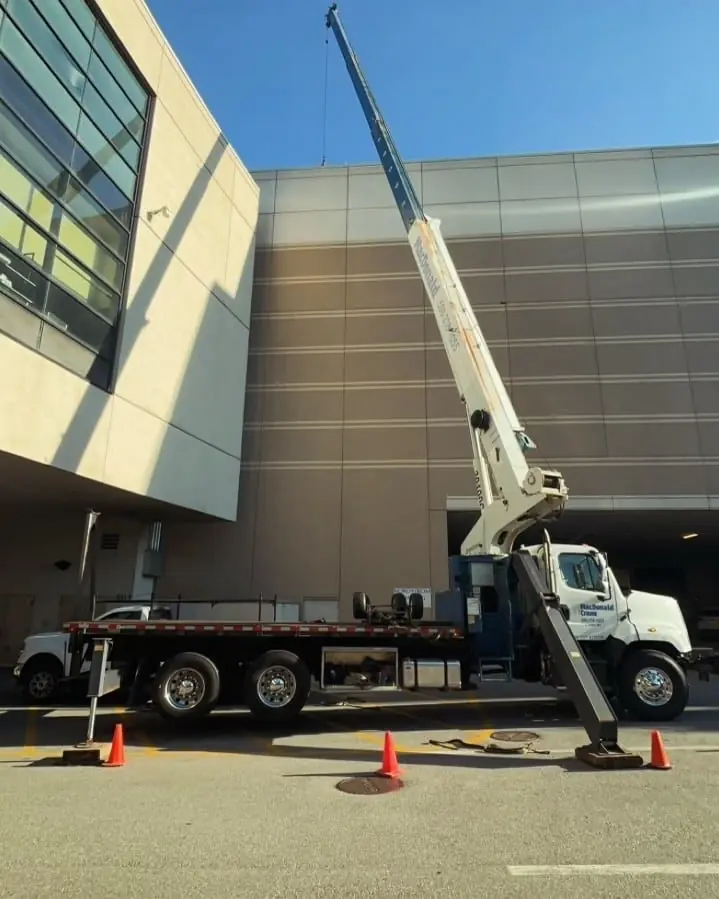
A MacDonald Crane boom truck with its boom raised beside a multi-storey commercial building

What the heaviest skid weighs. Module weight and skid configuration vary by manufacturer, so we need the actual shipment details. Racking and ballast come separately and often weigh more.

The height over the parapet. Measure to the top of the parapet rather than the eave, since the parapet is the line every load crosses. Screen walls and existing rooftop units are part of that line.

How far out the far corner sits. Pace it from wherever a crane could stand to the corner of the array furthest away. That distance counts for as much as the weight when we pick the machine.

Those three details help determine the crane requirements before a date is scheduled.

Send Us the Layout and the Skid Weight

The layout and the heaviest skid go a long way toward the machine, the setup spot and how the day breaks up. They also flag any part of the array that is going to be hard to reach.

  • Weight per bundle

  • Roof height

  • Distance from the edge

No layout yet? A photograph of the roof and one of the lot below will get us started. Or call (508) 238-1055.

Send It Over

Experience Contractors Return To

2009the year cranes started going out of the Easton yard
9 in 10jobs come from contractors who have booked us before
1 dayone business day to get a certificate of insurance to you
NCCERthe ANAB-accredited program behind every operator we send

How Does an Array Get Onto the Roof?

  1. Before the date.

    Send the heaviest skid, the roof height and where the far corner sits. We come back with the machine, and we ask when the modules are due so the crane is not waiting on the freight.

  2. Getting set.

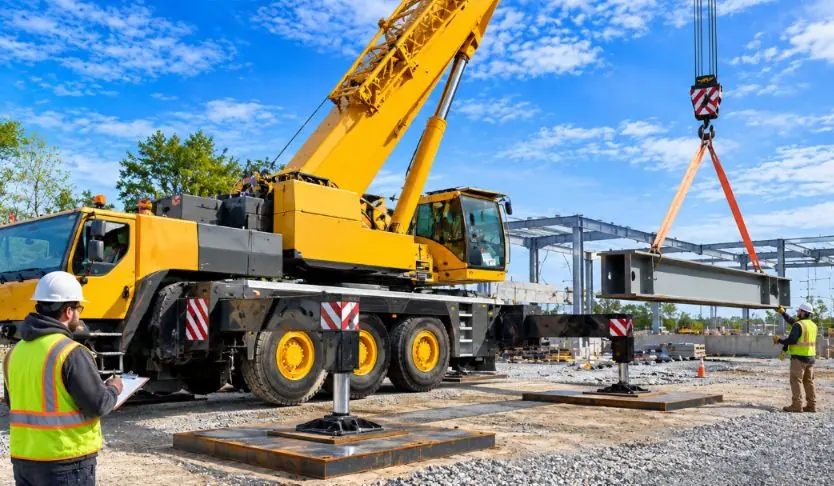
    Pads go under the outriggers, then the operator reviews the loading sequence with the person coordinating the roof work. On a wide array that is also where we find out whether the crane has to move partway through.

  3. The skids.

    Panels, racking, ballast and roof equipment go up in the order the crew asks for, each set down where the array is being built next.

  4. Packing in.

    Once the last skid is up, anything not staying comes back down. Then the crane packs in and clears the lot.

What Has to Be Set Before We Load

We bring

  • An operator carrying NCCER certification for mobile crane work
  • Slings and shackles sized to fly a banded skid level
  • Cribbing and pads to get the outriggers onto firm ground
  • A certificate of insurance, one business day from the ask

You arrange

  • Roof access, and people up there to take every skid off the hook
  • Modules, racking and ballast delivered and reachable at grade
  • Firm ground beside the building, with the approach clear
  • Any street permit, and the police detail if the crane takes a lane

That last line is worth settling early. We do not pull permits and we do not book police details. It belongs to whoever schedules the job, so start with the town once the date looks firm.

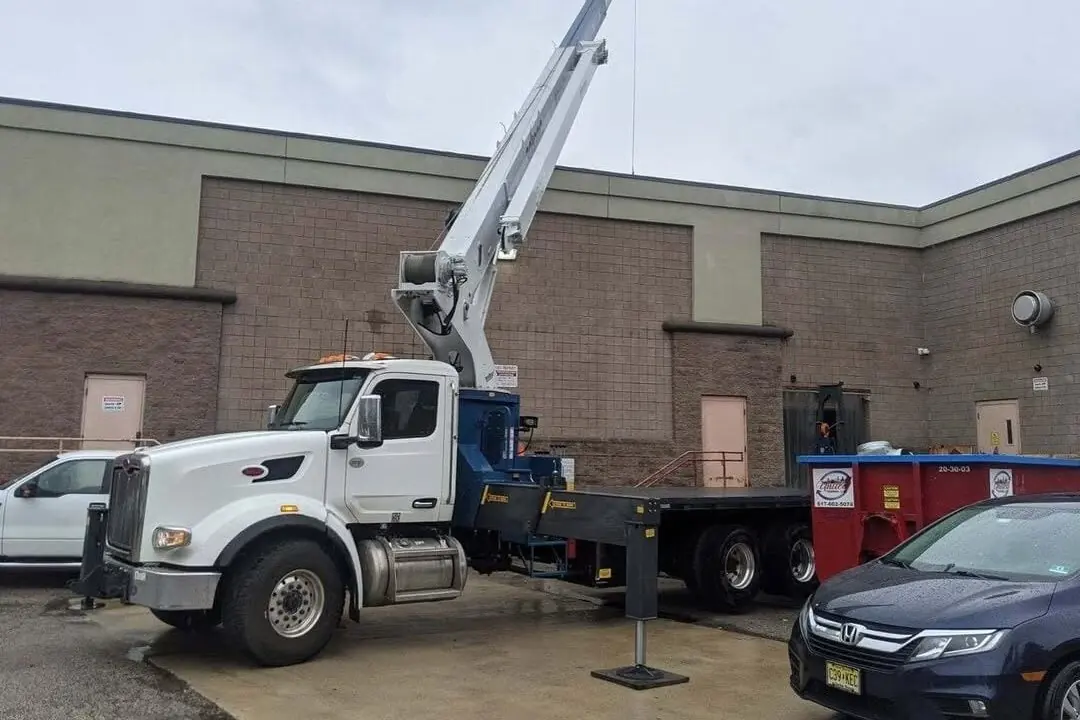
A MacDonald Crane boom truck set up beside an office building

4 Reasons Solar Installers Put Us on the Schedule

Reach Is Measured to the Far Corner

Most loads land somewhere near the building edge. An array does not, because it covers the whole roof, so the corner furthest from the crane is the one worth checking first. Mark it on the layout and we can talk the machine through on the first call.

The Ballast Is the Heavy Part

On a ballasted flat roof the panels are rarely the heaviest thing going up. The blocks are, and there are a good many more of them than there are panels. Give us the ballast count alongside the module count and the hours stop being a guess.

Modules Fly on the Factory Skid

A skid leaves the factory banded flat. We rig it that way and land it that way, so your crew opens it up on the roof instead of splitting the pallet down in the lot and sending modules up loose.

The Freight Lands Before We Do

A crane that gets to site ahead of the modules is a crane standing still. Tell us when the delivery is booked and where the skids can sit at grade, and we will book the crane for after it lands.

What Drives the Cost of Loading an Array?

Four things fill the hours. The count of skids first, since modules, racking, ballast and inverters each make their own trip up. Then which machine the roof needs, because the bigger one carries a higher rate and a longer minimum. Then how far each load travels once it is over the parapet. Travel requirements can also affect the overall time involved.

The skids are the part you control. Have the material at grade, people on the roof and the landing spots agreed, and the hours go on lifting instead of waiting.

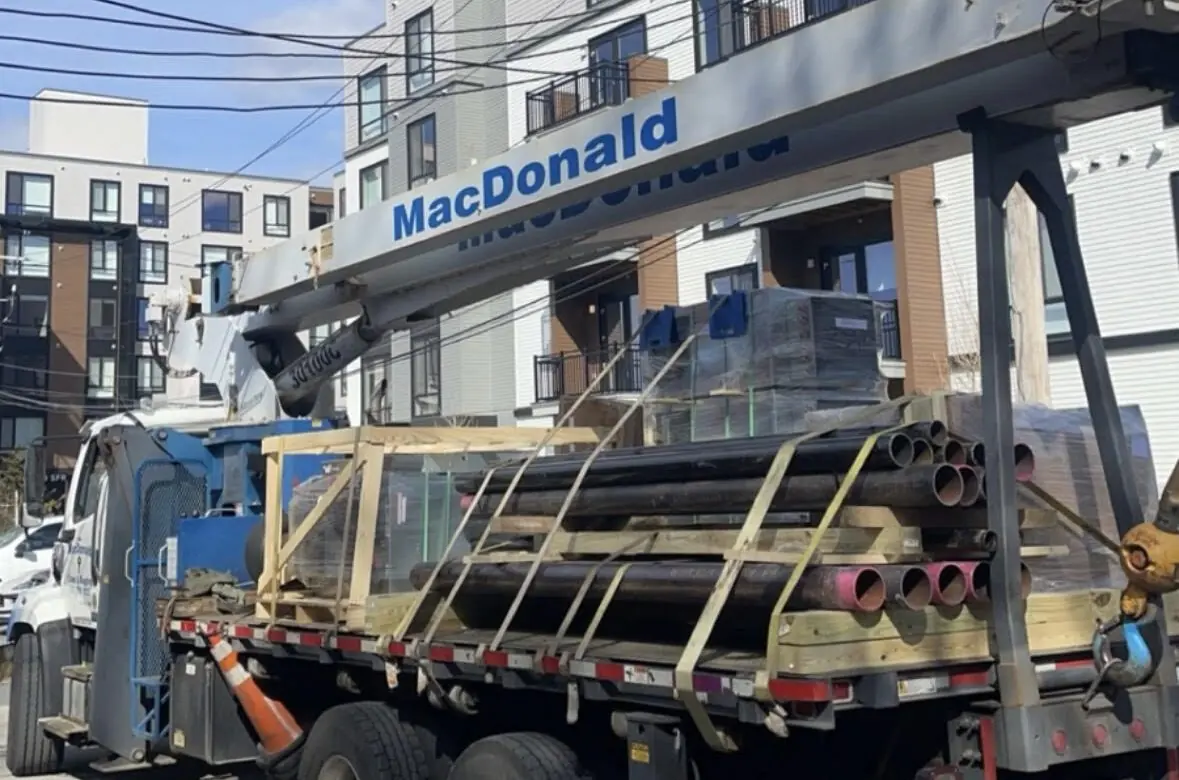
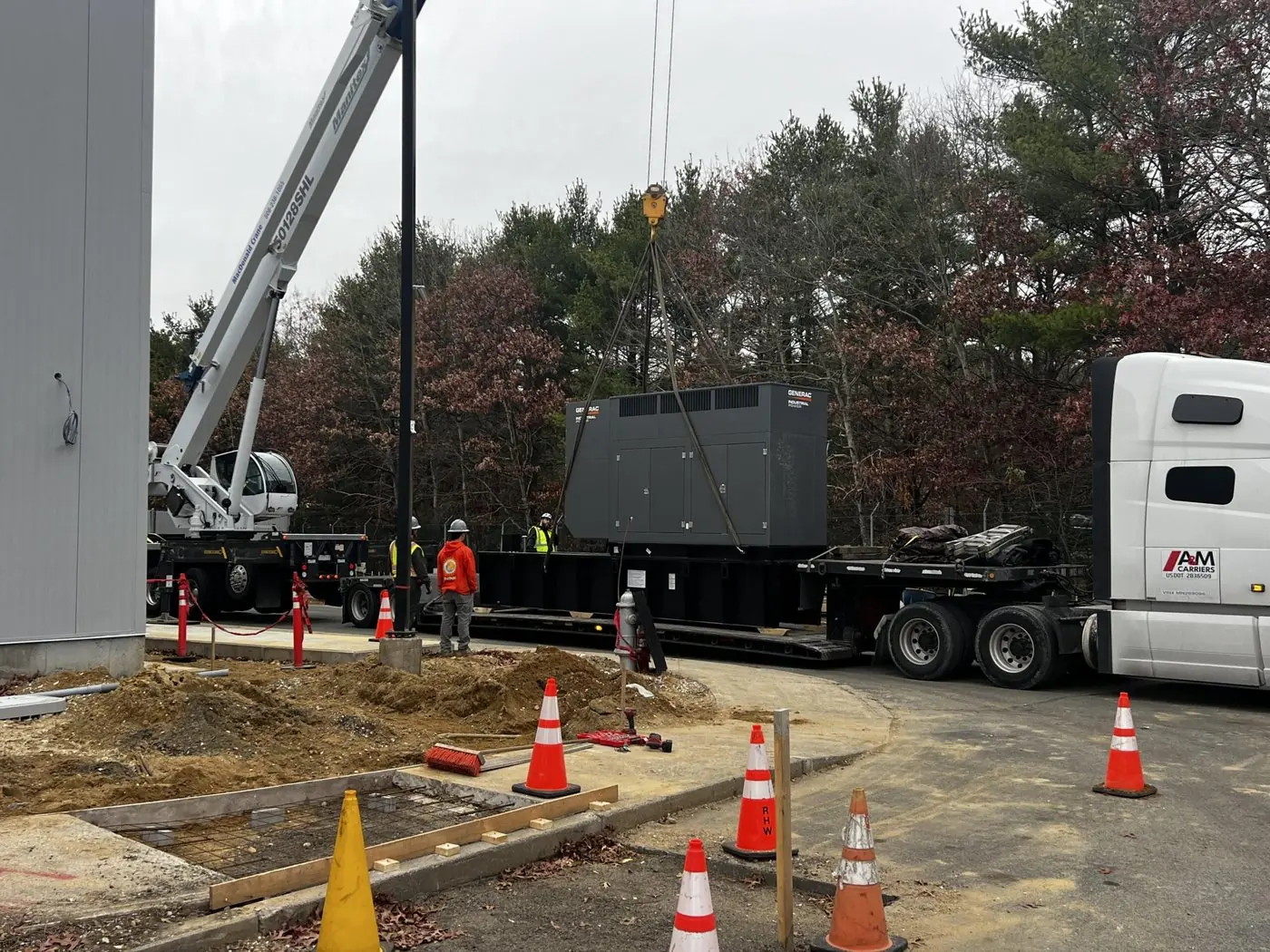
A MacDonald Crane truck loaded with material for a job site Hourly rates, minimums and how we bill

Where the Cranes Travel

Based in Easton, MacDonald Crane serves commercial solar installers across Southeastern Massachusetts and surrounding areas.

See our full service area »
  • Norfolk County
  • Braintree
  • Canton
  • Dedham
  • Foxborough
  • Quincy
  • Sharon
  • Stoughton
  • Walpole
  • Suffolk County
  • Boston
  • Chelsea
  • Revere
  • Winthrop
  • Worcester County
  • Auburn
  • Milford
  • Northborough
  • Shrewsbury
  • Westborough
  • Worcester

FAQs

Can you load an occupied building's roof?

Yes, and it is normal on commercial solar. Send a photograph of the lot and we will pick the crane's setup spot before the date.

How many skids will one visit cover?

It depends on the reach as much as the count. A skid going to the far corner takes longer than one near the edge. Send the layout and we will work it out.

Do you lift the racking and ballast too?

Yes. Racking, ballast blocks and roof-mounted equipment all go up on the same visit. Count them in when you tell us the number of skids.

How much lead time do you need?

Two to three days is usual. Ask sooner if the building is tall or the only setup spot is a narrow service drive.

Will the crane reach the whole array?

The layout, setup location and reach requirements determine how much of the array can be covered from one position.

Google Reviews

What Our Customers Say

4.8 Google reviews
  • Google review

    As the CFO of Climate Design Systems & Merrimack Valley Corporation, MacDonald Crane has been a very reliable partner to us and has always come through. Their prices are very competative to other local crane companies and they deliver! I highly recommend.

    Keith Bentley, Google reviewerKeith BentleyGoogle reviewRead on Google
  • Google review

    10 years ago they delivered and placed four rooftop units to my job site. They were punctual, professional and the driver was a hot ticket. Will definitely use them again.

    Gary Vitagliano, Google reviewerGary VitaglianoGoogle reviewRead on Google
  • Google review

    Very reliable & safety is their #1 concern

    Cheryl O'Donnell, Google reviewerCheryl O'DonnellGoogle reviewRead on Google
  • Google review

    I have a hot tub business and use MacDonald exclusively for crane service. Best around!

    Roger Mayer, Google reviewerRoger MayerGoogle reviewRead on Google

Get Every Skid Onto the Roof

The panels are on the ground, the racking is behind them and the roof is still bare. Tell us the weight of your heaviest skid, what it has to clear on the way over, and where the far corner of the array sits. From that we can size the machine and put a run of hours against it.

Call (508) 238-1055