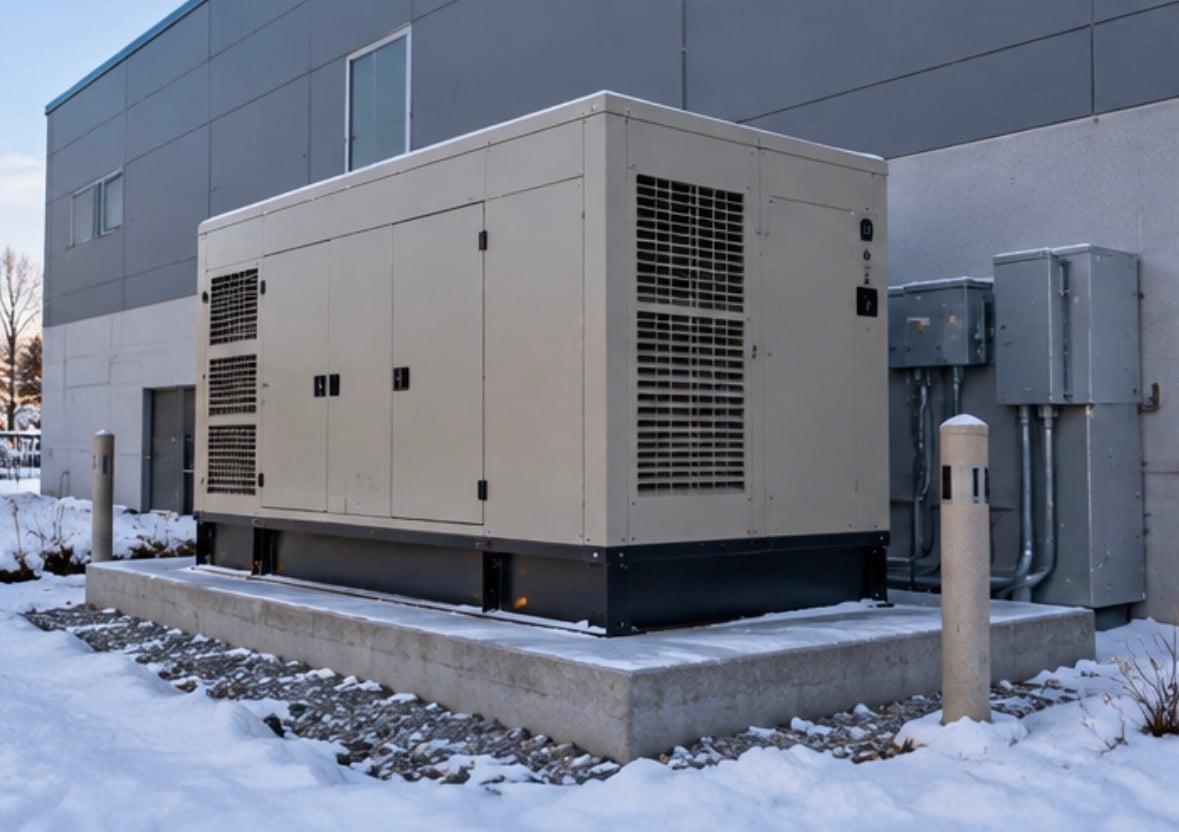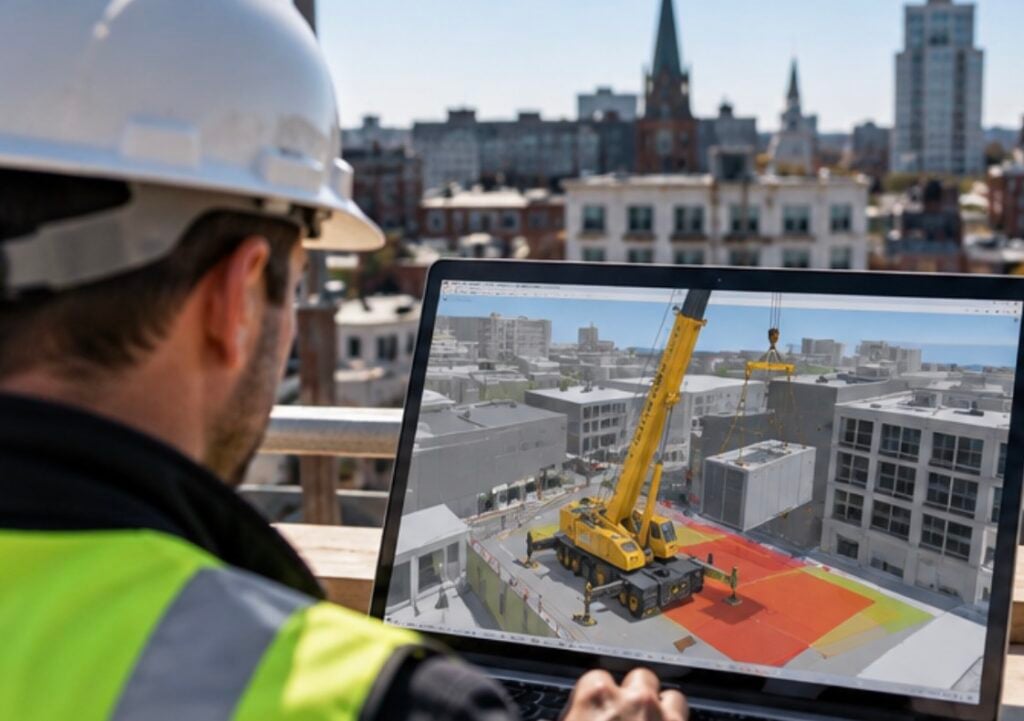
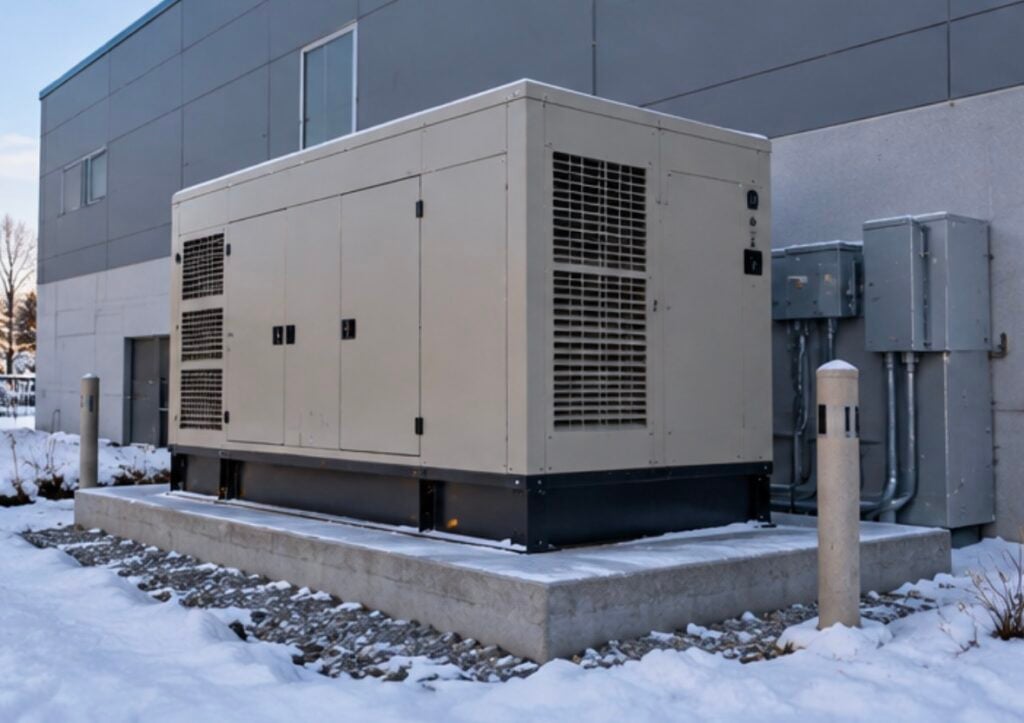
Installing a commercial generator before winter takes more planning than scheduling a crane and choosing a day for delivery. The generator has to reach the jobsite, the crane needs a suitable setup location, and the final placement area must be ready before the load ever leaves the ground. In Massachusetts, changing weather, tight commercial sites, and winter ground conditions can make those details even more important.
For general contractors, HVAC contractors, and property owners, the goal is to have the generator, crane, rigging crew, delivery team, and installation crew ready at the same time. Reviewing those details early gives everyone a chance to address access, equipment, and scheduling problems before they turn into delays on lift day.
What Information Should You Confirm Before Scheduling the Generator Lift?
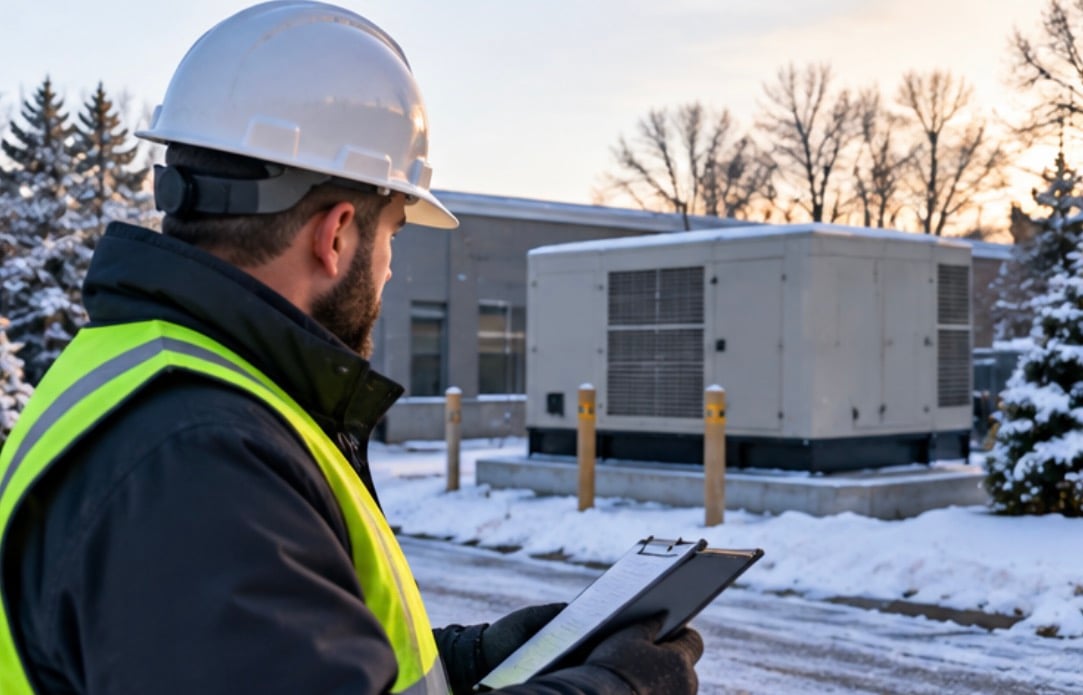
Every commercial generator lift starts with accurate information about the equipment and the jobsite. The crane company needs to know what will be lifted, where it will be placed, how high it needs to go, and how far the crane must reach. This is the same information used to build a useful crane rental quote before equipment is scheduled. Those details help determine the appropriate crane and setup plan for the project.
Before contacting a crane rental company, have these details available:
| Project Detail | Why It Matters |
|---|---|
| Generator weight | Helps determine the crane capacity needed for the planned lift. |
| Generator dimensions | Helps identify rigging requirements and clearance limitations around the load. |
| Lift radius | Determines how much lifting capacity remains at the planned reach. |
| Lift height | Helps establish the required boom length and crane configuration. |
| Final placement | Shows where the load needs to travel and land. |
| Jobsite address | Helps identify access, traffic, and surrounding site restrictions. |
| Preferred lift date | Gives the crane company time to plan equipment and scheduling. |
Make sure the generator weight represents the configuration that will actually be lifted. Depending on the project, that may include the enclosure, base, accessories, or other components that remain attached during the lift. Manufacturer documentation and project drawings are useful for confirming those details.
Providing this information early also gives the crane company an opportunity to identify questions before mobilization. For larger commercial projects, a site visit can reveal access, ground, clearance, or setup concerns that may not be obvious from photographs or drawings alone. A formal crane lift planning review can help organize those details before lift day.
How Does Lift Radius Affect the Crane You Need?
Generator weight is important, but it does not tell the crane company everything it needs to know. MacDonald Crane’s lift planning service considers the load together with working radius, setup, access, and site conditions. The crane’s lifting capacity changes as the load moves farther away from the crane’s center of rotation. That means the distance between the crane setup location and the generator’s final landing point can have a major effect on crane selection.
For example, a generator that can be handled at a short radius may require a different crane configuration if it has to reach across a parking area or farther toward the opposite side of a building. The same generator weight can therefore require different planning depending on where the crane can safely set up.
Before the crane is selected, confirm:
- Generator weight: Provide the actual lifted weight, including any components or accessories that will remain attached.
- Final placement: Identify the exact location where the generator will be positioned.
- Lift radius: Measure the approximate distance between crane setup and final placement.
- Lift height: Include the building height and any additional clearance needed.
- Access limitations: Identify anything that could prevent the crane from reaching its setup location.
These details allow the crane company to evaluate the planned lift against the appropriate equipment capabilities and site conditions rather than selecting a crane based on generator weight alone.
What Should Be Evaluated During the Site Walk?

A site walk gives the project team a chance to look at the entire lift before equipment arrives. The review should include the crane access route, setup area, generator delivery path, overhead environment, planned load path, and final landing location.
Check the Ground and Setup Area
The crane needs a suitable surface for its planned setup. Look for soft or disturbed ground, slopes, excavations, recently filled areas, underground concerns, and other conditions that could affect the setup. Massachusetts weather can also change a jobsite quickly, particularly when rain, snow, freezing temperatures, or freeze-thaw conditions affect the ground.
Confirm How the Crane Will Access the Site
Check driveway widths, gates, turning areas, pavement conditions, grades, temporary fencing, parked vehicles, dumpsters, and construction materials. A crane that works on paper may not be practical if the access route prevents it from reaching the planned setup location.
Look at the Entire Lift Path
The boom and suspended generator need a clear path to the final placement area. Identify buildings, trees, light poles, utility lines, communication lines, and other overhead obstacles before lift day. If the crane will operate near power lines, the project team should address the applicable clearance and control requirements before the operation begins.
Plan for Traffic and Pedestrian Access
Commercial generator lifts sometimes require a crane or delivery truck to occupy part of a street, parking area, sidewalk, or other public space. Determine early whether traffic controls, lane closures, barricades, flaggers, police details, or municipal approvals will be necessary.
Once the site walk is complete, everyone involved should understand where the crane will set up, how the generator will arrive, what path the load will follow, and where it will land. If the jobsite changes before the lift, review the plan again instead of assuming the original conditions still apply.
How Should the Generator Be Prepared Before the Crane Arrives?
The generator should be ready for lifting before the delivery truck and crane arrive at the jobsite. Confirm the manufacturer’s approved lifting points, equipment weight, dimensions, and any instructions that affect how the generator should be handled. Having this information ready prevents the crew from trying to resolve basic equipment questions after the crane is already positioned.
Generator configurations can vary considerably. An enclosure, base, fuel-related components, battery equipment, exhaust components, or other accessories may affect the weight and dimensions of the complete load. Confirm what will be lifted together and whether any components need to be secured or handled separately.
The final landing area should also be ready before the generator is lifted. For a rooftop installation, coordinate the equipment pad, structural support, roof curb, access requirements, and installation crew in advance. Once the generator is suspended, there should be a clear plan for where it is going and what happens immediately after it lands.
How Does Winter Weather Change Generator Lift Planning?
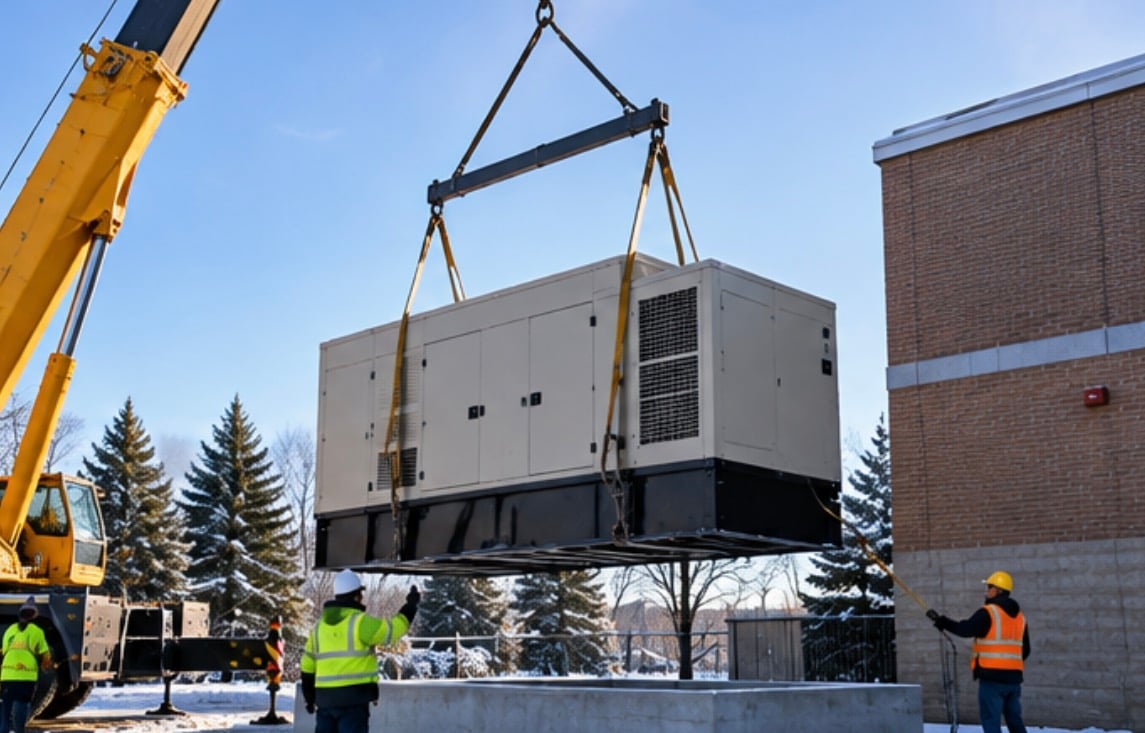
Winter adds another layer of planning to commercial generator lifts in Massachusetts. Snow, ice, wet ground, freezing temperatures, wind, and shorter daylight hours can affect crane access and the timing of the operation. A site that worked well during an earlier inspection may look very different after a winter storm.
Watch Wind Conditions
Wind can affect both crane operations and suspended loads, particularly when lifting a large generator with a broad enclosure. The crane operator should evaluate actual conditions and follow the equipment requirements and established lift plan. If conditions are not suitable for the planned operation, the lift may need to be postponed.
Prepare for Snow and Ice
Clear snow and ice from the crane access route, setup area, and generator landing area before the scheduled lift. Wet or disturbed ground may also require additional preparation. Check the site again shortly before mobilization because changing weather can affect conditions after the original site walk.
Plan Around Limited Daylight
Winter provides fewer daylight hours for outdoor construction work. Give the crew enough time for crane setup, rigging, equipment positioning, and final placement instead of scheduling the operation too tightly. Good scheduling gives the team more flexibility if winter conditions slow down part of the setup.
Planning around winter conditions does not mean trying to predict the weather weeks in advance. It means building enough flexibility into the schedule to review the site and make changes when conditions no longer match the original lift plan.
Who Needs to Coordinate the Generator Lift?
Commercial generator installations often involve several companies and trades. The general contractor may manage the overall schedule, while the HVAC contractor, generator supplier, electrical contractor, crane company, rigging crew, and property representative may each have different responsibilities.
Before lift day, confirm who is responsible for:
- Generator delivery: Confirm when the generator arrives and where the truck will stage.
- Equipment information: Verify the final weight, dimensions, and manufacturer lifting documentation.
- Rigging: Confirm the approved lifting points and required rigging arrangements.
- Crane setup: Establish the crane position, access route, and planned lifting area.
- Site preparation: Make sure the setup and final landing areas are ready.
- Traffic control: Arrange any required roadway or pedestrian controls beforehand.
- Final placement: Have the installation crew ready when the generator reaches its destination.
- Weather decisions: Establish who will review conditions and communicate schedule changes.
This coordination becomes especially important when the crane is scheduled for a limited window. Having the installation crew and equipment ready when the generator reaches the roof or equipment pad helps avoid paying for crane time while other parts of the project are still being prepared. If you are budgeting the lift, MacDonald’s guide to crane rental costs in Massachusetts explains the factors that can affect the final price.
What Should Be Confirmed Before the Crane Arrives?
A final review shortly before the scheduled lift gives the project team one more opportunity to catch changes. Construction sites move quickly, and materials, vehicles, fencing, access routes, or ground conditions may be different from what was present during the original planning.
Before the crane arrives, confirm:
- Generator weight and dimensions remain accurate.
- Approved lifting points and rigging information are available.
- Crane setup location and planned radius remain workable.
- Access routes are clear for the crane and delivery vehicle.
- Ground conditions have been re-evaluated for the planned setup.
- Overhead clearances and the load path remain unobstructed.
- The final landing area is completely prepared.
- Weather and traffic-control arrangements are confirmed.
If something has changed, communicate it before the crane is mobilized. A short planning review can be much easier to manage than discovering an access problem after the equipment and crew are already on site.
What Are the Most Common Problems That Delay Generator Lifts?
Most generator lift delays come from information or site conditions that were not addressed early enough. Commercial jobsites can change quickly, which is why even a well-planned lift deserves a final review before mobilization.
| Potential Problem | How It Can Affect the Lift |
|---|---|
| Incorrect generator weight | The planned crane may not provide the required capacity. |
| Longer lift radius | A different crane or configuration may become necessary. |
| Blocked access route | The crane or delivery truck may not reach the setup area. |
| Soft or saturated ground | Additional site preparation may become necessary. |
| Overhead obstruction | The planned boom or load path may need adjustment. |
| Snow or ice | Access and setup conditions may become unsuitable. |
| Unprepared landing area | The generator may have nowhere ready for final placement. |
| Missing traffic controls | Public access restrictions may prevent the lift from starting. |
For example, the same generator may require different crane planning when the final landing point is significantly farther from the crane. The load does not change, but the increased working radius can change the crane configuration and available capacity.
Addressing these details before lift day gives the general contractor, HVAC contractor, and crane company more time to make adjustments. It also helps the installation crew know exactly what needs to happen once the generator reaches its final position.
Why Choose MacDonald Crane for Commercial Generator Lifts in Massachusetts?
A commercial generator lift involves more than moving heavy equipment from one location to another. The crane, generator, rigging, access route, setup area, weather, and installation crew all need to work together for the operation to stay on schedule.
At MacDonald Crane, we work with general contractors, HVAC contractors, and other construction professionals to help plan commercial lifting operations before the crane arrives. Our team can review the generator weight, lifting radius, access requirements, and jobsite conditions to help determine the appropriate crane solution for the project.
With more than 15 years of experience, MacDonald Crane provides crane rental services for commercial generators, rooftop HVAC equipment, structural steel, mechanical equipment, and other construction projects throughout Massachusetts.
If you are planning a commercial generator installation before winter, early coordination gives your team more time to address access, ground conditions, weather, equipment, and scheduling requirements. Contact MacDonald Crane at (508) 238-1055 to discuss your upcoming generator lift and the requirements of your Massachusetts jobsite.
Frequently Asked Questions
How early should a generator lift be planned?
Start planning as soon as the generator weight, dimensions, final placement, and likely delivery window are known. Earlier planning gives the crane company more time to review access, working radius, setup conditions, rigging information, and any site restrictions that could affect crane selection.
Does generator weight alone determine the crane size?
No. Weight is only one part of the decision. Working radius, lift height, boom configuration, site access, ground conditions, load path, and final placement all affect the crane and setup needed for the lift.
What happens if the jobsite changes after the lift is planned?
The plan should be reviewed again before mobilization. New fencing, parked equipment, excavations, snow, saturated ground, or access changes can affect a setup that worked during the original site walk.
Can a generator lift still happen in winter?
Yes, if the site and weather conditions remain suitable for the planned operation. Snow, ice, wind, frozen or saturated ground, limited daylight, and access conditions all need to be considered before the lift proceeds.
What information should I send the crane company first?
Provide the jobsite address, generator weight and dimensions, approved lifting points, final placement, approximate lift height and radius, access information, site photos or drawings, and the preferred lift date.